


Preceding story: Birth of a Spitfire Squadron - RAF Drem

The location of RAF Hornchurch and RAF Southend in 11 Group

An aerial photo of RAF Hornchurch taken in 1944

A Luftwaffe reconnaissance dossier showing RAF Southend

The Hornchruch Sector lay at the mouth of the Thames Estuary covering some of the shortest distances to occupied Europe. Strategically, the sector came under 11 Group whose radius of operations in 1942 stretched from Rotterdam down to the eastern edge of the Cherbourg Peninsula.
When 453 Squadron arrived in the Hornchurch sector it covered 5 airfields over the mouth of the Thames Estuary.
Each of those airfields stationed an assortment of squadrons and aircraft:
453 Squadron operated from two airfields during its time in the Hornchurch Sector. RAF Hornchurch - the sector headquarters, and RAF Southend - a civilian airport that had been requisitioned by the RAF at the start of hostilities. The war had been going on for just over 3 years before 453 Squadron arrived, but in those few years both airfields had already written a long list of stories and created legends amongst the RAF.
453 Squadron entered the air war over Europe when they arrived at RAF Hornchurch in late September 1942. Hornchurch had played a key role during the Battle of Britain, but the nature of the air war had changed significantly since then.
In 1940, Nazi forces blitzed their way across Europe on what seemed like an unstoppable rampage. The British Expeditionary Force found itself cornered in the French coastal town of Dunkirk, while the Royal Navy desperately tried to rescue as many of the over 400,000 personnel as possible. The Royal Air Force (RAF), stretched to its limits, fought fiercely to hold back the Luftwaffe as they attacked the evacuation efforts. This intense battle period became known around Hornchurch as the "Dunkirk taxi service days," driven by stories of pilots like New Zealand ace Alan Deere, who, after being shot down, managed to return across the channel and be back in the cockpit of a Spitfire ready to fight over Dunkirk in less than 19 hours.
Standing victorious after their Blitzkrieg through the low countries (Belgium, Luxembourg, Netherlands and France), the Nazi forces settled on the shores of the English Channel and turned their eyes west in preparation for Operation Sea Lion, the invasion of Great Britain. The Germans had come to the conclusion that the Allies would fight relentlessly for over the next three years, any invasion across the channel would require absolute air supremacy
For nearly four months during the summer of 1940, the Luftwaffe was committed to destroying the Royal Air Force (RAF) over Great Britain. RAF Fighter Command, supported by allied pilots from around the world, engaged in epic battles in the skies above. The Germans launched everything they had against Great Britain. However, large bomber formations suffered significant losses at the hands of Fighter Command. Ultimately, the Luftwaffe could not sustain its daylight bombing offensive and transitioned to a night bombing campaign known as the Blitz. As a result of this failure to gain air superiority, Operation Sea Lion was cancelled.
By 1942, the Blitz had concluded, and large-scale bombing campaigns against Great Britain had ceased. In a significant shift, RAF Bomber Command took the offensive against German industry and cities. Similarly, Fighter Command began to operate offensively, crossing the channel in search of new strategies to engage the Luftwaffe in combat.
In August 1941 RAF pilots reported a new enemy aircraft that was running rings around the Spitfire Mk.Vb.
"Whatever these strange fighters were, they gave us a hard time of it. They seemed to be faster in a zoom climb than a 109, far more stable in a vertical dive, and they turned better than the Messerschmitt, for we had all our work cut out to shake them off."
- Air vice marshal Johnnie Johnson
The Focke Wulf 190 became a source of fear among the pilots. The RAF implemented several modifications to enhance the performance of the Spitfire Mk.Vb in an effort to compete with this new foe. Changes were made to the 40-series Merlin engines, and even the iconic elliptical wings that the Spitfire was famous for, were shortened, or “clipped” in the pursuit of better performance. However, the Fw.190 maintained its superiority over Fighter Command until late 1942, when the RAF introduced the Spitfire Mk.IX into service.
In September 1942, Spitfire squadrons equipped with the Mk. IX were few and far between. Only six out of the sixty-two Spitfire squadrons in RAF Fighter Command had been equipped with them; 453 Squadron was not among that number. It joined the war with their Spitfire Mk.Vb's’s flown down from RAF Drem. When 453 Squadron arrived at RAF Hornchurch, the pace of operations led by Fighter Command had comparatively slowed down, as the winter months created less favourable flying conditions.
The line astern formation and weaving tactics

Spitfires with drop tanks in line astern formation
Source: IWM (APY 29)

(Picture issued 1943) A formation of Spitfire IX fighters of R.A.F. Fighter command returning to a South of England base after a sweep over enemy occupied territory.
Source: IWM (CH 8613)

A varient of the early Vic formations

Line astern, similar in appearance to the Vic but with wider spacing and sections organised into 4 aircraft.

In an attempt to address the weakness of the line astern, some squadrons implemented a constant weaving. This was the formation that 453 Squadron used when they entered ops in 1942.
AA742
Squadron codes:
Unknown
FU-D
AB786
Squadron codes:
Unknown
FU-K
AB792
Squadron codes:
Unknown
Lost on Oct 11th 1942 in a collision with Al Menzies on operations, pilot Ben Nossiter K.I.A
AB814
Squadron codes:
Unknown
FU-D
AD118
Squadron codes:
Unknown
FU-K
AD228
Squadron codes:
Unknown
FU-T
AD298
Squadron codes:
Unknown
Lost on Oct 11th 1942 in a collision with Ben Nossiter on operations. Pilot Al Meznies K.I.A
AD381
Squadron codes:
Unknown
FU-F, FU-P
AD383
Squadron codes:
Unknown
FU-R, FU-?
AD386
Squadron codes:
Unknown
AD474
Squadron codes:
Unknown
FU-C
AD475
Squadron codes:
Unknown
FU-T
AR340
Squadron codes:
Unknown
FU-E
AR362
Squadron codes:
Unknown
FU-V
AR373
Squadron codes:
Unknown
FU-X
AR392
Squadron codes:
Unknown
FU-J
AR392
Squadron codes:
Unknown
FU-J
AR396
Squadron codes:
Unknown
FU-K
BL223
Squadron codes:
Unknown
FU-S
BL302
Squadron codes:
Unknown
FU-W
BL311
Squadron codes:
Unknown
FU-H
BL477
Squadron codes:
Unknown
FU-R
BL516
Squadron codes:
Unknown
FU-F
BL578
Squadron codes:
Unknown
BL638
Squadron codes:
Unknown
FU-G
BL671
Squadron codes:
Unknown
FU-H
BL899
Squadron codes:
Unknown
FU-W
Lost to flak Dec 10th 1942 during an anti-shipping operation. Pilot Bill De Cosier K.I.A
BL923
Squadron codes:
Unknown
Lost on Oct 31st 1942 after an engine failure on operations. Pilot Jim Furlong K.I.A
BM152
Squadron codes:
Unknown
FU-Z
BM528
Squadron codes:
Unknown
FU-G
EN824
Squadron codes:
Unknown
FU-U
Lost to flak Dec 10th 1942 during an anti-shipping operation. Pilot Slim Yarra K.I.A.
EN947
Squadron codes:
Unknown
FU-Y
EN950
Squadron codes:
Unknown
FU-L, FU-A
W3127
Squadron codes:
Unknown
FU-U
W3574
Squadron codes:
Unknown
FU-Q
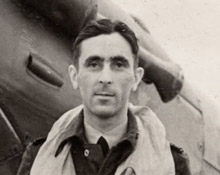
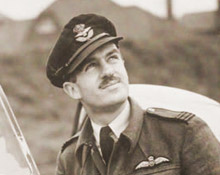

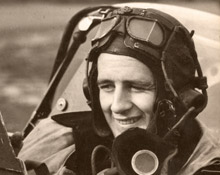
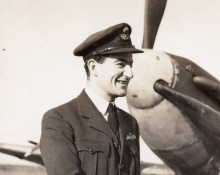
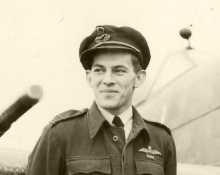
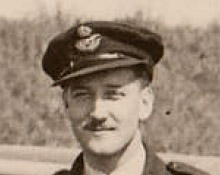
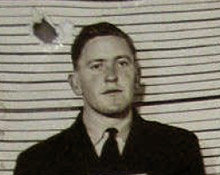
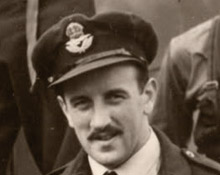
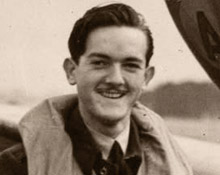
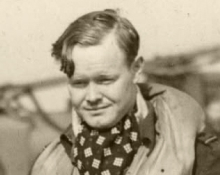
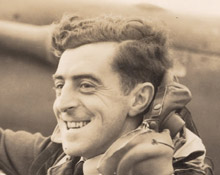
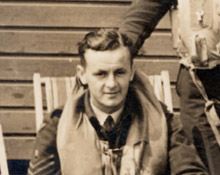
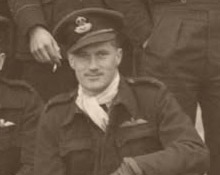
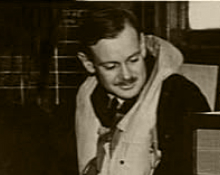

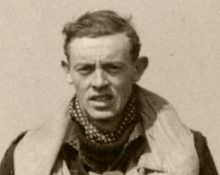
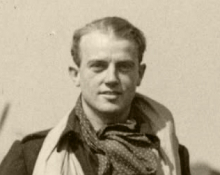
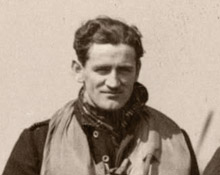
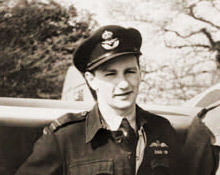
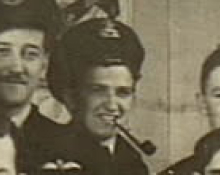
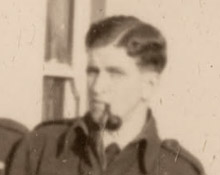
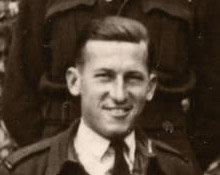
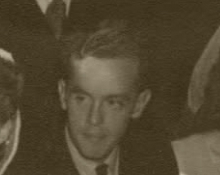
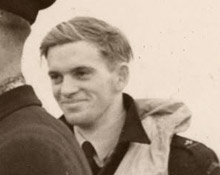
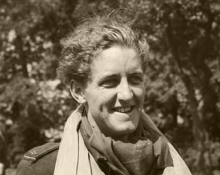
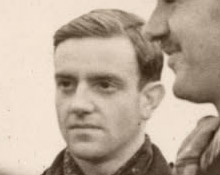
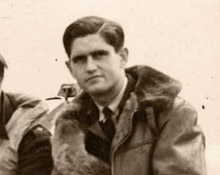
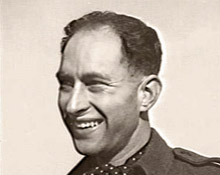
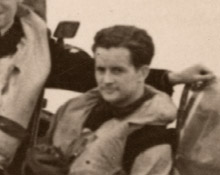
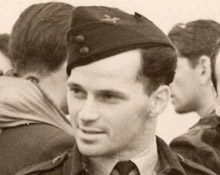
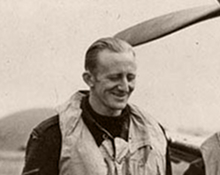
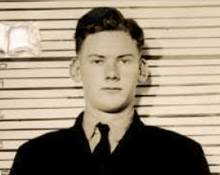
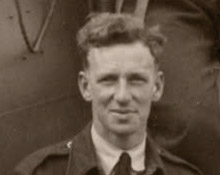
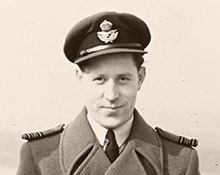
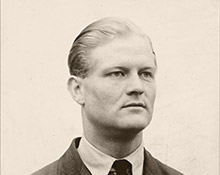
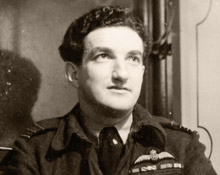
The majority of 453 Squadron RAAF arrived at RAF Hornchurch on September 26, 1942, after nearly four months forming at RAF Drem (the story can be read under "The birth of a Spitfire Squadron - RAF Drem"). No longer patrolling the quiet airspace of 13 Group, their posting to the heavily contested 11 Group’s Hornchurch Sector was seen by some as entering “the real war.”
A look at the newly arrived Australians as they stepped down from their Spitfires and took off their leather flying helmets would reveal young faces yet to be etched by the hard lines of battle.
They were a new squadron, with only the Commanding Officer Francis “Tony” Morello, and the Flight Commanders, John “Jack” Ratten and Fighter Ace John “Slim” Yarra possessing any significant operational experience.
Al Menzies spent two months flying with 72 Squadron. He had been there during the same period as Jack Ratten, flying under the legendary Brian Kingcome out of the famed RAF Biggen Hill station. It was a short tenure, but he still flew a wide range of operations, including patrols, scrambles, anti-shipping roadsteads, rodeo fighter sweeps and bomber escorts.
Dick Ford had flown with 452 Squadron RAAF for even less time. He had been ripped from his posting after being unfairly accused of all but "Lack of Moral Fiber" (a vilifying RAF term implying cowardice, often used against those with symptoms of PTSD). A censor had flagged a letter he had written to a friend, in which Dick mentioned he had been scared on his first operation. He had been given a second chance under a watchful eye with 453 Squadron, but that deserves a story of its own.
The rest of the Australians would have been known as “sprogs,” RAF slang for new and inexperienced pilots who had yet to mature and prove themselves in battle.
The squadron began readiness the morning after arriving at RAF Hornchurch from RAF Drem. The Australians, not on stand-by, explored their new station, trying to get the “gen” off the station personnel between rounds of spit-and-polish on their "kites" as they nervously waited to be called upon for something bigger.
“Just in case anything happened to my last letter, I will add again the news that I am on a new station. It is one of England’s crack fighter stations and is very conveniently situated close to London. The Mess is undoubtedly the best one I have yet been a member of.
The food although well rationed is very good indeed and there is plenty. The rest and smoking rooms as well as recreational facilities are very good too. Being close to London is another big advantage.”
- Rusty Leith describing RAF Hornchurch

Two of the pilots who went on the squadron's first sortie in 11 Group
L-R: Bill De Cosier, Russ Ewins, Dick Darcey

"Fleet Air Arm planes patrolling over a convoy."
Source: IWM (A 3803)
The call to fly for 11 Group came the next day when Dick Darcey and Bill De Cosier took part in the squadron's first sortie: Convoy Patrol.
Similar to the Firth of Forth at Drem, the Thames Estuary was a vital route for supply ships accessing London docks, which made the Hornchurch Sector a natural target for roaming Luftwaffe attacks.
For Dick, Bill, and the numerous pilots conducting convoy patrols, the biggest risk was often posed by the convoy itself rather than the Luftwaffe. Gunners operating the anti-aircraft guns scattered across the convoy could be understandably twitchy. Spitfires approaching a convoy had to be cautious. Making contact wasn’t as straightforward as raising the convoy on the RT; The Germans actively monitored radio waves and could quickly determine a convoy's location if they intercepted any transmissions.
Instead, pilots would use a Morse tapper fitted to the right side of the cockpit. Rather than being connected to the radio, it was wired to upward and downward-facing identification lights. The section leader would tap out the letter of the day, no doubt as every gun in the convoy tracked their movements. Only after receiving an acknowledgment signal flashed back at them would the two Spitfires approach the convoy and commence their patrol above it. During that initial squadron patrol, the main risk for Dick and Bill was the harsh weather, as they struggled through low clouds and rain.
While they could be monotonous, some of the convoys patrolled by the squadron not only transported vital supplies but also supported some of the war's largest operations.
"You have probably read recently of the amazing convoy or convoys that have successfully taken part in the North African affair. The following is a description of a sight that I was lucky enough to see. I was flying at about 2,000 feet above the sea patrolling a convoy. The sun was rising and the sea a lovely blue. The ships were moving slowly behind each other with their naval escort. As I continued to patrol another convoy appeared ahead coming head on. Gradually the ships closed till as they joined there was a marvellous line as far as the eye could see.
It was an amazing sight and one I wont ever forget. There were ships of all kinds and sizes with the neat low naval vessels interspersed between them. The bright sunshine and blue sea and sky made the picture seem unreal, and the fact that there was a war on, fantastic. I didn’t let my imagination catch on and looked about all the harder for the “wily old Hun."
- Rusty Leith describing one of the convoys supporting Operation Torch
Over the next few days, there were more convoys and standing patrols. The pilots were eager to face anything that approached, but the only threat was the "soup”, which rolled in often and, more than a few times, had the patrols recalled early. After four days at RAF Hornchurch, Len Hansell, somewhat dejected, summed up the general feeling.
“Quiet as 13 group, bags of soup and readiness”
Not long after arriving, S/Ldr Tony Morello was hospitalised with bronchitis, though the squadron diary notes he appeared to have found himself a constant supply of grapes which would have no doubt been under strict wartime rationing otherwise.
With Tony out of action, it fell on Jack Ratten, Officer Commanding (OC) A Flight, to manage the squadron. On the first of October, Ratten shot a bolt of excitement through the squadron with the order that all aircraft and personnel were to be in top condition by nightfall. Something big was planned; 18 pilots readied their gear to fly out the next morning, while the others arranged to follow by train. The Australians' nervousness must have been evident when, rather unusually, they behaved themselves and went to bed early from the station dance.
The squadron knew something was about to happen, but the briefing still struck like a bombshell when they were told the squadron was about to cross the channel into occupied Europe for their first Fighter Sweep. The plan involved 11 selected pilots from 453, led by Wing Commander Rhys “Tommy” Thomas, the Hornchurch Wing Leader, to join other wings for a diversionary sweep over France to draw the Luftwaffe away from a B-17 raid on the Avions Potez aircraft factory at Meaulte.
The Spitfires would then head back to a forward base where they would operate from for the foreseeable future, on standby to take part in “Operation Aflame." Operation Aflame was planned to occur some time between October 4th and 16th, contingent on favourable flying conditions. The intention was to mount a combined-arms assault on Berck to lure the Luftwaffe into a substantial air engagement, similar to the showdown above Dieppe during Operation Jubilee. The aim was that this battle would strain Luftwaffe resources and prevent reinforcements from reaching North Africa during Operation Torch. Nonetheless, the operation was never executed.
The remaining pilots moved to the forward base in the squadron's other Spitfires or by rail. The Squadron members who were slated for the sweep must have felt a mix of emotions when the sweep was cancelled shortly after takeoff. They landed at the forward operating base where they met the rest of the squadron settling into their new quarters.
The forward base was RAF Southend, located 20 miles closer to the coast than Hornchurch. The remaining squadron members moved ahead, with some ferrying squadrons reserve Spitfires and others travelling by rail.
"The Mess I am writing in at present is away from “home” (Hornchurch) and it is surrounded in history according to the locals. Prior to the war the building was a golf clubhouse and the boards with different trophy winners still remain. In the years gone by Ann Boleyn (I can’t guarantee the spelling) was supposed to have stayed in the same “Golf Clubhouse-Sgts Mess”. The Mess is quite good but not up to the same standard as the one I have previously described.
We are billeted in a cottage which the RAF has taken over. You would be amused if you could see us standing on our beds and suitcases or kitbags putting up blankets with drawing pins to act as blackout curtains. With four other lads I sleep in the “dormitory” as we nickname it. Its previous name was “sitting room”. The “dining room” also houses a couple. All in all we have lots of fun."
- Rusty Leith describing the squadrons arrival at RAF Southend
The original 11 pilots from the first sweep arrived shortly before lunch; it hadn’t lasted long before being called off. After a quick meal, they were back at their Spitfires ready for the next show.
“Bags of nervous tension as we are strapped into our kites but pretty pleased about the adventure and being selected to go.”
- Len Hansell
At 13:25, the Australians ready in the cockpits leaned forward and “pressed teats” (RAF slang for pressing the starter buttons). Across RAF Southend, flames spat from exhausts, propellers turned slowly before the 12 cylinders of each Merlin engine compressed, combusted, and then roared into life in a cacophony that echoed across the field. Ground crews ducked forward out of view before reappearing, giving the pilot a thumbs-up, their opposite hands holding the disconnected cable ends of their starter carts.
Moments later, the Spitfires trundled out of their dispersal bays. Each pilot leaned from side to side out of their cockpit, straining to see past the long nose of their Spitfire. The wobbly procession of zigzagging and made its way around the perimeter track and formed up in an upwind position. Five minutes after starting up, the sound of Merlins reached a crescendo as 453 squadron roared across RAF Southend with the Belgians of 350 squadron moments behind them.
24 elliptical wings tilted into a turn before W/Cmd Tommy Thomas put the Hornchurch Wing into a gentle climb up the Essex coast. Bags of Spitfires in every direction gathered over Orfordness, where the Australians joined forces with the North Weald and Debden wings. With the Spitfire formations assembled into a large sweep, the Australians banked out to sea in the squadron's first flight over the perilous skies of occupied Belgium.
The indicator hands on their altimeters turned steadily as the Australians climbed towards the enemy coastline. At 28,000 ft, the dials settled as the squadron levelled out at the briefed height. Scanning the skies around them, the Australians could see another friendly squadron positioned above the Hornchurch wing at 30,000 ft. Below, several other wings were stacked at different altitudes above a smoky haze that lingered over the Channel and Belgium just beyond. The thick haze below didn’t affect the Australians; at 28,000 ft, their eyes scanned through clear, sunny skies.
The force of Spitfires made landfall over the Port city of Ostend, Belgium. Soon after, Appledore radar controllers began reporting plots of enemy aircraft, with calls of “15+ coming from St Omer” and “25+ coming from Abbeville” crackling over their radios as the Luftwaffe responded to their presence.
Jack Ratten transmitted over the RT that he had spotted the bandits; the Squadron visibly came to life “with a prompt extraction of fingers” as the nervous tension rose and the weaving increased. Over the RT, chaos erupted as Fw.190s attacked one of the other wings.
"I saw aircraft flying hell for west and crooked but was unable to tell one from the other, most of the time, I was too busy watching our tails to bother too much about them; there was too much happening all at once for me to comprehend anything really coherently … the only thing I was fully cognisant of was our precarious position, I wasn’t scared but mighty uneasy lest I fail to cope and lose our section."
- Len Hansell describing the squadrons first fighter sweep
There must have been a few exhales of relief from the overwhelmed Australians when W/Cmd Thomas turned his downwards and withdrew the Hornchurch Wing towards the sea. The Spitfires crossed back into the channel between Dunkirk and Calais at speeds over 430 mph before returning to RAF Southend, all aircraft back safely.
"I was too tired to care about anything that night, the bodily and mental weariness that only great strain can produce, similar to the weariness after my first solo or my first solo aerobatics."
- Len Hansell describing the squadrons first fighter sweep

Russ Ewins logbook of a showing the squadrons first sweep on October 2nd and a newspaper cutting of the day.
_tn.jpg)
A photo of 64 Squadron at RAF Hornchurch showing a typical blast pen that was used to disperse aircraft around the field
Source: IWM (CH 5746)
The excitement from the Squadron's first sweep didn’t progress much further for a few days; the soup rolled in again, limiting flying to not much more than practice flights and sector familiarisation. Anything that been Operation Aflame fizzled out with the weather.
On the 6th, the weather cleared just enough for W/Cmd Tommy Thomas to organise an afternoon Roadstead (a mission to attack shipping). 132 Squadron flew across from RAF Hornchurch being lead by Tommy Thompson. For 132 Squadron, who had recently joined 11 Group after spending a year at RAF Peterhead in North Scotland since its formation, it was a significant moment.
“This was a great day in the Squadron’s history as they took part in their first offensive operation - a shipping reconnaissance off the French coast”
- 132 Squadron ORB
Jack Ratten led the 12 Spitfires of 453 to form up with 132, as W/Cmd Thomas set a course of 110° and led the fledgling formation into the channel at 300 ft. As the Wing neared the coastal town of Dunkirk, Tommy Thomas banked right, leading his force of Spitfires into the start of the sweep. 24 sets of eyes scoured the coast though flight goggles, searching for any signs of German shipping making its way between the Nazi-controlled ports.
The Wing swept down from Dunkirk making it’s way toward Cape Griz Nez, W/Cmd Thomas keeping the Spitfires just outside the range of German anti-aircraft positions, or so he thought.
Any illusion of safety was shattered by the chunks of stressed skin aluminium blown off Tommy Thompson’s Spitfire. The Germans unleashed a firestorm at the Hornchurch Wing as 453 squadron came under intense anti-aircraft fire from the coastal defences. The Spitfires turned away from the coast, but the relentless gunners didn’t let up; the heavy thuds, bursts of smoke and flashes of explosion followed them as they made their escape.
The Germans, clearly determined that the Hornchurch Wing didn’t return anytime soon, kept firing until the French coast was 5 miles behind them.
Tommy Thomas came away uninjured despite the hits to his Spitfire; luckily his engine was also unscathed, he returned to RAF Hornchurch safely with the other squadrons.
“Did a low level sweep along the French coast looking for shipping, saw none. Flak and coast fire at Gravelines, W.Cd kite was hit, got back O.K.”
- Russ Ewins
On the 9th, 11 Group undertook the largest single operation in the war thus far. 108 American heavy bombers included the B17 and the very first mission ever undertaken by the B24 Liberators took to the skies. Hundreds of Spitfires from 11 Group reinforced by P-38 lightnings of the USAAF took part in the main operation and three supporting diversionary raids.
Hornchurch went out with three squadrons to escort one of the diversionary raids of 12 bombers, hoping to pull fighters away from the main force. The Hornchurch wing went up with 132 and 485 squadrons, with the squadrons' Belgian friends from 350 joining the wing from Southend. Frustrated, 453 Squadron watched from the sidelines as they went on convoy patrol covering two convoys heading into the estuary - “No incident”.
The most significant event for 453 that day was their return to RAF Hornchurch, which had been achieved by nightfall.
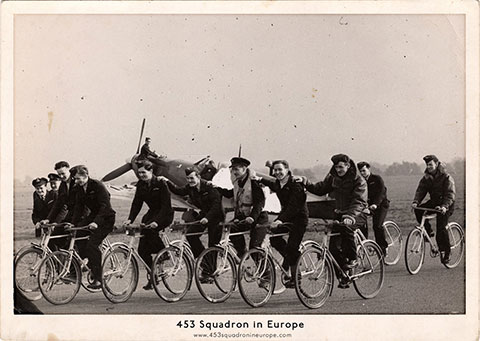
Formation practice is serious stuff! Squadron shenanigans at RAF Hornchurch.
L-R: Tom Swift, Geoff Galwey, Jim Ferguson, unknown, Jack Stansfield, Bill De Cosier, Johnny Barrien, Dick Long, Len Hansell, Freddy Thornley, Unknown

"The 3 fours" - Jim Ferguson
L-R: Jack Stansfield, Bob Clemesha, Jim Ferguson
The 11th started with the Squadron on dawn readiness and convoy patrols. By 11:45, Freddy Thornely and Lawrie Cronin put back down at Hornchurch; another morning of monotonous patrols chalked up with “no incident”.
It looked like the day would finish quietly; the pilots were mid-lunch when they paused for the Tannoy crackling to life:
“All Dinky and Magpie Squadrons to report to Intelligence at 1310 hours”.
The call for “Dinky” meant that 453 was up.
The Australians made their way to the intelligence block with pilots of 122 Squadron making up “Magpie” squadron. W/Cmd Tommy Thomas laid out the plan to the room. He was leading from the front with 453 Squadron; they would be joined by their Belgian friends of 350, still at Southend, in a sweep over the St Omer area at 24,000 ft. Their role was to serve as the worm on the hook, dangled down to draw in the Luftwaffe fighters. They would be followed by the Spitfires of 331 and 332 Squadrons (Norway) of the North Weald wing. High above them, 64 Squadron and 122 Squadrons would be positioned in their high-performance Spitfire Mk.IXs, ready to pounce on any Germans that tried to take a bite off the hook.
Things moved quickly: at 13:20, the pilots left the intelligence block and by 13:40 the growls from their Spitfires were already receding from RAF Hornchurch. Tommy led the Spitfires due east, flying over RAF Southend, where they picked up 350 Squadron before banking gently and heading up the coast.
At 14,000 ft over Felixstowe, they rendezvoused with 64 Squadron and the North Weald Wing before turning out over the North Sea. The force of Spitfire Mk.Vb’s followed Tommy Thomas as he climbed them up to 24,000 ft. The Spitfire Mk.IX Squadrons continued climbing, positioning themselves above the Mk.Vb's all the way up to 37,000 ft.
The Hornchurch wing announced its presence with long lines of contrail streaming behind their Spitfires as they crossed the French coast above Dunkirk. Ahead of them, ominous trails of vapour climbed through 24,000 ft as waiting Luftwaffe fighters positioned themselves to attack.
Tensions rose as the ground controllers reported plots of enemy aircraft growing in concentration over St Omer. W/Cmd Thomas kept the squadron on its heading, veering north-east of the briefed route over St Omer to avoid flying directly below the bandits.
The Spitfire Mk.Vb squadrons had accomplished their mission, drawing the enemy aircraft upward. About twenty Fw.190s circled above 453 Squadron, prepared to attack at any moment. With their objective complete and now in a vulnerable position, W/Cmd Thomas began to manoeuvre the Hornchurch Wing back toward home.
The Fw.190s pounced as the Hornchurch Wing turned. Just as planned, the Spitfire Mk.IX squadrons overhead swooped in on the diving Fw.190s. The Australians watched, tensions high, as the contrails above them weaved in and out of each other as a furball broke out between the Fw.190s and the Spitfire Mk.IX's. The attack had been halted, but the remaining Fw.190s had scattered in all directions around the Squadron.
The Spitfire Mk.Vb’s of 453 and 350 continued to withdraw, crossing back into the channel at 22,000 ft over Gravelines, all the while pursued by six Fw.190s stalking 1,000 ft above, poised to strike. Nerves kicked in as the Australians, still employing an outdated RAF line-astern formation, started weaving with increasing violence. Each pilot desperately looking over their shoulder as they swept from side to side, ready to shout “Dinky Squadron Break!” into their RT the moment the Fw.190s started to dive.
Without warning, two Spitfires from Yellow section burst out of formation and dropped towards the channel. Amidst the chaotic weaving, two of them had crossed paths. Al Menzies' Spitfire tore through Ben Nossiter’s just behind the cockpit, cleaving Ben’s aircraft in two. The violent impact tore off one of Al’s wings, which could be seen drifting steadily down toward the waiting channel.
Al went into a flat spin and descended slowly towards the North Sea. For four long minutes, the remainder of Yellow section followed him down. Jack Ratten and Tommy Swift hoping to see him jump from his cockpit to an unfurling parachute. As Al spun through the cloud layer, Jack Ratten switched himself to the Air Sea Rescue channel and started issuing a Mayday call. But Al Menzies hit the water and went down with his Spitfire with the high likelihood that he was knocked out during the initial impact and never came round.
Al Menzies was one of the few pilots outside of the CO and two flight commanders who had any, if little operational experience. Nobody saw Ben again after the violent collision. The Sergeant's mess was notably subdued that night.
“Old Ben was a grand fellow, Scruffy Ben I used to call him. Smiles covered his happy crinkly face when he talked. The scruffy part came from his shock of scruffy golden curls, a damn shame, I’ll miss old Ben.”
- Len Hansell remembering Ben Nossiter.

L-R: Spit Steele, Hal Parker, Jack Ratten, Ben Nossiter at RAF Drem. Sadly by wars end, all four of these Australians had died or been killed.

Pilots of the Hornchurch Wing attend a briefing by the Intelligence Officer prior to a fighter sweep over France, at Hornchurch, Essex.
Source: IWM (CH 5746)
The assessment from the "Form 765 - Report on flying accident or forced landing not attributable to enemy action" concluded the following:
“This accident is attributed to an error of judgement on the part of one or both pilots concerned. The presence of the enemy A/C in rear was probably claiming their whole attention at the time of the accident.
Such violent weaving is not necessary in the absence of an actual attack, and necessary instructions have been issued by W/C flying.”
Al Menzies was 26 and Ben Nossiter 23 when they plunged in to the channel that day, neither were ever recovered. Their names can be found amongst the bronze panels of the Roll of Honour at the Australian War Memorial and and the stone walls of the Runnymede Memorial.
Apart from escorting some Westland Whirlwinds to engage some reported E-Boats that had disappeared, the following days involved a series of convoy and standing patrols, each documented in the Squadron Operations Record Book (ORB) with another tedious sign-off of “No incident”. The only notable moment was the frustration experienced by Jim Ferguson and Lawrie Cronin after they pursued a bogey between Dover and Dungeness, only to discover that operations had been attempting to vector the pair onto themselves.
Standing Patrols were an effort to stop the “Tip and run” raids that were terrorising England.
"The enemy's tactics in low level raids were designed to exploit any weakness in the British defences. They usually took the following form. The raiders, each armed with one 500-pound bomb, approached the coast at sea level, so as to evade R.D.F, detection, at high speed (usually 340 miles per hour). Climbing rapidly to bombing height they dived down out of the sun onto the target, normally a coastal town which enabled aircraft to escape quickly after the attack.
The choice of targets was largely indiscriminate which made it difficult to concentrate anti-aircraft gun defences or to anticipate potential targets of the raiders. At their briefings, enemy pilots were often told to attack anything and everything liable to frighten the British public. Trains, motor buses, pedestrians, gatherings of people, herds of sheep and cattle were recommended as suitable targets
Interception of the fighter bombers was very difficult because of their high speed and the difficulties of sighting very low level aircraft from an interceptor flying above them.”
- Tip and run Raids as described by the RAF Air Historical Branch: The struggle for air supremacy
The initial 1942 tip-and-run raids were conducted using Messerschmitt 109 aircraft (Me.109), each capable of carrying a 250kg bomb. By August of that year, Fighter Command observed a concerning rise in tip-and-run raids executed by Fw.190s. The Fw.190s could easily outpace the Spitfire Mk.Vb and carry a 500kg bomb, which was twice the size of any payload the Me.109 could deliver.
Dick Darcey and Bill De Cosier were the first to encounter excitement during a standing patrol. On the 22nd, they spotted three Fw.190s that had just bombed Deal. Unfortunately for the Australians, the Fw.190s were in a hurry to get home. In their outclassed Spitfire Mk.Vb's the pair could not launch an attack, let alone chase them down.
It was merely a teaser for the coming 10 days, as the standing patrols of 453 squadron became decidedly less monotonous.

Dick Darcey in one of his squadron Spitfires (presumably the third) FU-X with his stinker nose art.

A Fw.190 armed with a bomb.
One can imagine fear gripping the streets of Folkestone as another series of explosions ripped through the town. No air-raid sirens, no yells from the air-wardens, no warning at all. Just the sudden blast followed by the menacing growl of radial engines as the Fw.190 raiders escaped towards the channel.
One can also imagine the terror transforming to a surge of excitement as the crowds heard the iconic, guttural roar of Merlin engines. An excited shout from someone who spotted and pointed out the two Spitfires chasing down the attackers. The cheers of defiance rising from the crowds as the rhythmic thumping of Hispano cannons echoed across Folkestone when the first of the two Spitfires opened fire.
It paints quite a heroic picture.
In the cockpit of the Spitfire, Jim “Fergie” Ferguson had one thought as his thumb drove into the recessed cannon selection of his firing button.
"You ruddy show off Ferguson!"
Despite the heroic image Fergie presented as he roared across the rooftops with cannons thundering, the rounds fell well short, leaving nothing but splashes behind the Fw.190s as he chased them out to sea. A moment later, his No.2, Norm Swift, also opened fire to the same effect.
Only months later, after the RAF ran tests on a captured Fw.190, did the pair learn that their Spitfire Mk.Vb’s were 25-30 mph slower than the Luftwaffe aircraft they were chasing.It didn’t stop Fergie and Norm from trying; they had crossed half the channel and expended all their cannon rounds before finally giving up the chase.
But the moment Jim’s thumb pushed into the gun button had made squadron history as the first time 453 Squadron fired in anger and engaged the enemy.
The next day, the squadron went on another Rodeo through thick layers of cloud over Dunkirk and St Omer, but the Luftwaffe didn’t react.
Slim Yarra and Len Hansell attempted a Rhubarb the following day. As they neared the French coast, the weather suddenly cleared, leaving the two exposed for miles. After receiving an “unhealthy” dose of flak off Ostend without spotting any ships to target, the pair opened the taps and turned for home. Once again, thwarted by bad weather.
The weather didn’t ease up over in the days after, apart from a brief period of convoy patrols and a small weather break that limited flying to just 50 minutes, mainly to test their ageing Spitfires Mk.Vb's. The squadron sat on its heels, writing letters home, attending lectures, and of course, visiting the local pubs. October 31st, 1942, would not be as quiet.
On the morning of the 31st, B Flight put forward two proposals for Rhubarb to Catch, the Squadron Spy (Intelligence officer). Slim Yarra and Len Hansell were to head out on a route to beat up a gasworks around Fecamp, while Russ Ewins and Bill De Cosier presented a plan to run a Rhubarb through St Valery.
Intelligence had approved the planned Rhubarbs, but at the last minute, operations called through and cancelled both. A Whirlwind squadron had beaten them to the punch. After 10 days of foul weather and monotonous patrols, the frustrated Australians reacted bitterly with a few choice words. Any frustration they felt didn’t linger past lunchtime when Catch swung by to tell the B Flight pilots that intelligence had reported that only one of the Whirlwinds had returned from France.
Rusty Leith and Jim Furlong climbed out of Hornchurch as the third patrol 453 Squadron sent out that day. Another convoy patrol, Rusty led the section as Yellow One, with Jim supporting him as Yellow Two.
The section was positioned above a convoy on the Thames, roughly 30 minutes into their patrol, when Jim contacted Rusty via the RT. He was experiencing engine trouble and would have to land. Rusty, concerned for his No.2, asked if Jim if he wanted him to escort him back. But Jim was confident enough and told Rusty that he thought he would be able to make it to RAF Manston okay.
The pair were only about 5 miles off the shore, Rusty watched as Jim’s Spitfire broke formation and turned towards RAF Manston. Still concerned for his friend, Rusty performed a series of S turns, keeping an eye on Jim making his way towards land.
Rusty had reached a point several miles ahead of the convoy and had to turn back to maintain his patrol stance, momentarily losing sight of Jim in the turn. As he straightened out, he looked again for his No.2 and spotted the horrific sight of Jim’s Spitfire pouring white smoke from its engine, diving vertically in a plummet towards the sea.
Jim’s Spitfire crashed into the water. Rusty rushed to the location where Jim had gone in, but both he and his Spitfire sank below the waves almost immediately.
Switching his RT to the Air Sea Rescue (ASR) channel, Rusty made multiple Mayday calls circling the spot where Jim had descended below the waves. At Hornchurch, Ops scrambled Dick Ford and Hal Parker to take up Yellow sections' position over the convoy. The ASR launch arrived at the scene but only found two small pieces of wreckage, with no sign of Jim Furlong. The crash occurred at 15:30, and Rusty stayed over the site of Jim’s crash for so long that he didn’t return to Hornchurch until 16:15, almost 45 minutes later.
The cause of the crash was uncertain; one possibility was that Jim extended his glide too far, causing his Spitfire to stall and crash into the sea. Alternatively, the white smoke streaming from the aircraft suggested a glycol leak. The fumes may have incapacitated him in the cockpit, rendering him unconscious. The precise cause of the engine failure remains unknown, but it is noteworthy that December's ORB entry concluded with a negative assessment of the age and condition of 453 Squadron's Spitfire Mk.Vbs.
Jim Furlong was 24 when his Spitfire sunk beneath the Thames, his body was never recovered. His name can be found amongst the bronze panels of the Honour rolls in the Australian War memorial and etched into the stone walls of the Runnymede Memorial in the United Kingdom.
"Jim was the finest principled men I’ve ever met. Someone got a “preview” of our exam papers in Canada; Jim wouldn’t look at them, reckon it was not the game. He was a demon punster; one could hardly say a thing when Jim was in form without it shot back like lightning with some pun or other.
The squadron’s main source of wit went down in the Channel yesterday. He was a Melbourne boy, keen ice hockey player, trained at Temora and Borden with us.”
- Len Hansell remembering Jim Furlong.

L-R: Jim Furlong and Rusty Leith
Image courtesy of friend of the website www.rustyleith.com

Kit on, ready to go. Passing the time on readiness.
L-R: Jim Furlong and John Barrien
Red section, consisting of Johnny Barrien as Red 1 and Geoff Galwey as Red 2, departed Hornchurch at 16:05, relieving Dick Ford and Hal Parker over the convoy. Ten minutes later, Alec Blumer took off with Norm Swift in Green section to start a standing patrol between North and South Foreland.
Over North Foreland, Green section skimmed the low cloud base at 1500 ft when the RT crackled to life. Operations reporting a large mass of Bandits between Deal and Dover. The pair shoved their throttles open and roared south toward the reported area.
Norm Swift was the first to spot them, with a flick of his RT Switch, he informed his No.1 of the 50 or so Fw.190s flying below them on the deck. Without hesitation, Alec dived Green section onto the bandits in the hope of breaking up the mass of fighters.
Closing in fast, Alec positioned his Spitfire behind a formation of three Fw.190s and unleashed a hail of .303 and 20mm rounds. Seconds later, a stream of tracer lashing past the Australians Spitfire told him he had gone from the attacker to the attacked. He turned his head back and found himself staring down the nose of six Fw.190s. Tracer leapt from the leader's gun muzzles as the German fired another burst of fiery lead towards the Australian, who executed a sharp break before his Spitfire soared into cloud, escaping his pursuers.
As he followed his section leader into the mass of aircraft, Norm Swift targeted a Vic of Ju.88 medium bombers. He closed in fast: 800ft, 700ft, 600ft, 500ft and his gauntleted thumb drove into the fire button. For six long seconds, the fighter shook and shuddered against the backlash of the recoil. Still firing as he closed in on his prey, Norm saw the results of his work as white smoke began to pour from one of the wounded bomber's engines.
Six seconds is an eternity in a dogfight. Norms fighter pilot instinct must have told him to check his 6; his instinct was right.
“I looked behind and there’s two blokes right up my back side so I did a steep climb up into the clouds and lost them. I don’t know why they didn’t hit me, they must have been really cockeyed because I could see the tracers going past me”
- Norm Swift remembering October 31st
Norm claimed the Ju88 as damaged and made Squadron history by becoming the first pilot in 453 Squadron to inflict damage on an enemy aircraft.
About this time, Alec Blumer cried out the famous lines over the RT for all to hear.
“Get your finger out Ops, there’s 200 plus Huns coming in … No Ammunition left, send us some !@#! Spitfires … Tell the stupid Ack ack to stop !@#! Shooting at us!”
The official 453 Squadron ORB leaves a shorter version with no name against the pilot; one might imagine he could have been lined up for a bit of trouble with one of those Colonel Blimp types for the “slight” breaking of RT procedure; Lest he offend the delicate ears of the WAAFs manning filter room at Ops. But the battle went on.
John Barrien and Geoff Galway had just completed their shift over the convoy and had handed over to the relief section; the whole sortie was close to being chalked up as another “No incident” when Green section's famous words echoed over the radio waves.
This was the first sign that the raid was bigger than the Luftwaffe's usual tip-and-run attack. A moment later, control came through on the RT ordering Red section to proceed to Deal at speed. The pair arrived over the Kentish coast to see hordes of aircraft underneath them.
The large swarm of aircraft below them caused John Barrien to hesitate briefly, searching for a gap in the chaos where the pair could strike. Glancing over his shoulder to check his six, he spotted a formation of over eight Fw.190s diving towards the two Australians. In an instant, John wheeled the section around to face the onslaught.
“There was only one thing to do and that was engage them head-on. I went straight for the central and presumably leader of the flight and Geoff was on my right.”
- John Barrien
The Australians charged into the Fw.190s with guns blazing. John lined the illuminated orange ring of his gun sight on the leader's spinner and let fly with a 3-second burst. Up until this point, John had only ever fired his guns in anger at a target drouge during gunnery exercises, where the pilots only trained with the .303 machine guns. Out of habit, his thumb went straight for the recessed machine gun section of the three-position gun button, missing the opportunity to let loose with his 20mm cannons.
John flashed out of the other side of the melee and found himself in an unusual but not uncommon phenomenon pilots often encountered in aerial battle - going from overwhelming chaos to sudden stillness as they realised they were alone.
He searched the skies for any signs of Geoff, but like the Fw.190s, he had vanished. Keying his RT, John tried to raise his No.2, but there was no response.
The contents of his fuel tank added itself to John’s growing list of problems. Red section had entered the fight just after they had been relieved from convoy patrol. A quick press of the fuel gauge showed John he was running dangerously low on fuel and he banked towards the nearest airfield, RAF Manston. It wasn't long before another three Fw.190s started a fresh assault on the lone Australian trying to escape the area.
“I got a squirt at one but missed, and had to indulge in some aerobatics to throw them off. I had to weave like mad, of course, because one could not see behind and below themselves (sic). This was the reason for going in pairs - each had to guard the rear of the other.”
- John Barrien
John threw off his attackers and managed to get his Spitfire down at RAF Manston. He sat at the end of the runway, safe in the knowledge that he had lost his attackers, but he was wrong.
He looked up to a flash of movement and saw one of the Fw.190s diving towards him. The enormous, oversized RAF Manston runway had been built to handle emergency landings from aircraft as large as four-engined bombers. John would never reach cover in time.
His right hand snatched the brake lever on his spade grip, drawing it all the way to the stop, he gave a kick of full rudder through his flight boots which was followed a fraction later by his left hand driving the boost lever open. The Merlin roared, violently pivoting the Spitfire around on itself. His only defence now was the massive Merlin engine block he had positioned between himself and the attacker as he braced himself for the onslaught.
“When hey presto! The aerodrome defence system went into operation. Rockets around the perimeter shot up into the air. I had known that the rockets were joined together with cables and it looked as though the other pilot knew too … he eased up over the lot and flew off. I heaved a great sigh of relief.
I have always felt guilty because I did not make it my business then and there to seek out the aerodrome controller and thank him for saving me”
- John Barrien
As John taxied around the perimeter of Manston, he watched with great satisfaction as an aircraft went down in flames. Some other sector squadrons had been scrambled and were engaging the remnants of the raid.
After refuelling and inspecting his Spitfire for damage, he observed that one of the flap operating rods had broken, perhaps suggesting a faster landing approach than normal given the emergency situation.
But John was exhausted and just wanted to get home. He opted for a flapless landing at Hornchurch, which was challenging on the shorter fighter fields at the best of times, let alone at night. He arrived back at 453 Squadron to the news that there had been no word from Geoff Galwey.
Russ Ewins and Bill De Cosier, operating as Black section, had just got airborne to relieve Alec Blumer and Norm Swift in Green when Alec's famous lines cried through their headsets. They arrived in the area at the later stages of the fight, greeted with the sight of flak erupting all along the coast. Near Dover the pair spotted and dived on two Fw.190s. But the same old story elapsed and the Fw.190s speed allowed them to outrun the two Spitfire Mk.Vb’s. Like Fergie and Norm five days earlier, they chased the bandits halfway across the channel and tried some long-range shots at 800-1,000 yards, but to no effect.
Wilfred "Snow" Waldron and Mack McDermott were sent out as the new Yellow section to relieve what remained of Red. They spotted a single Fw.190 3 miles north of Dover at zero ft making hell for leather towards France. The pair were too far away to manage anything effective and continued their patrol. Ops held them and Black section on station for longer than normal lest the Luftwaffe throw something else at them in the fading light, the four landed at RAF Manston where they stayed the night.
Unfortunately, Mack hit a soft patch of ground left behind by a filled-in bomb crater and nosed over, destroying his propeller. One might think that the squadron's action that day fizzled out with Mack’s propeller, and for everyone back at Hornchurch it did, but not for Geoff Galway, who still remained missing.
Geoff had followed John as Red section turned in and faced the attackers head-on. He tore straight toward a group of four Fw.190s with his gun button depressed, his Spitfire reverberating with recoil. He didn’t see any strikes on the enemy aircraft, but he did see the strikes on his own. A maelstrom of enemy fire tore through Geoff's Spitfire, ripping off one of his wings. With no other options but to abandon his out-of-control aircraft, he faced the grim realisation that he was only a few hundred feet above the water.
“When I had to jump out I didn't think I could make it; it was like coming onto a railway station to catch an important train to the Melbourne Cup or something and see her just leaving the station! And I had the usual reactions - I didn't think of my past or anything like that - I felt like swearing.
At the same moment, I thought I'd have a go at it, so I pulled the hood release, the hood didn't come away so I bashed the cover with my fist, undid my oxygen gear and Sutton release and luckily at that stage the aircraft was upside-down and I fell out!
And as I was leaving the aircraft I thought it was the moment of impact and I was hitting the water, and it felt like being in water as I left the aircraft, and it seemed strange to be still conscious. So I pulled the ripcord and there was a sudden jerk and I found myself floating a few feet off the water, and I entered the water at that moment, and I was very pleased about all that”
- Geoff Galwey
With difficulty, Geoff managed to clear himself and inflate his dinghy, and then started the tough job of paddling towards what he thought was the English coast. A challenge made more difficult when he lost one of his paddles while trying to adjust the dinghy.
The temperature dropped to 7°C at RAF Manston. Out in the channel and wet to the bone, it was no doubt colder. Geoff struggled to stay warm; he could keep his toes warmish by scrunching them vigorously in his flight boots, but no matter what he did, he couldn't warm his thighs through his sodden uniform.
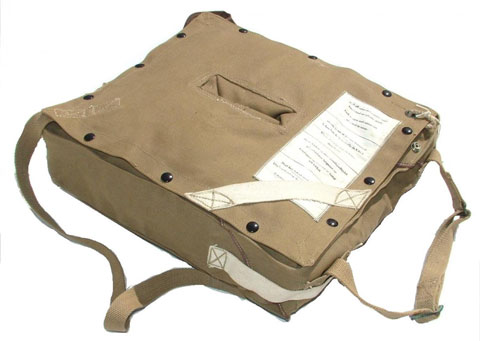
The pack that the K-type raft came in was strapped to the parachute harness and filled the well of the Spitfire seat.
Source: historicflyingclothing.com
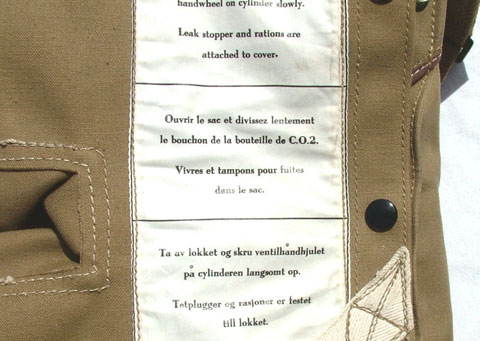
The instructions for the dinghy came in English, French, Czech and Polish.
Source: historicflyingclothing.com
Half an hour after getting into his dinghy, the sun set. Geoff took out his torch to locate the emergency stores that came with the dinghy, but it failed after only a few minutes, leaving him to fumble in the dark with cold hands. On top of that, the small dinghy being tossed by the waves caused him severe seasickness. The emergency rations, intended to be compact yet energy-dense, were too rich for him to consume. After no doubt swallowing a few solid mouthfuls of seawater when he first plunged into the channel, there was nothing more he yearned for than fresh water, even just a small sip to wash out his mouth.
With the setting sun came a second Luftwaffe attack with waves of bombers blitzing through the night.
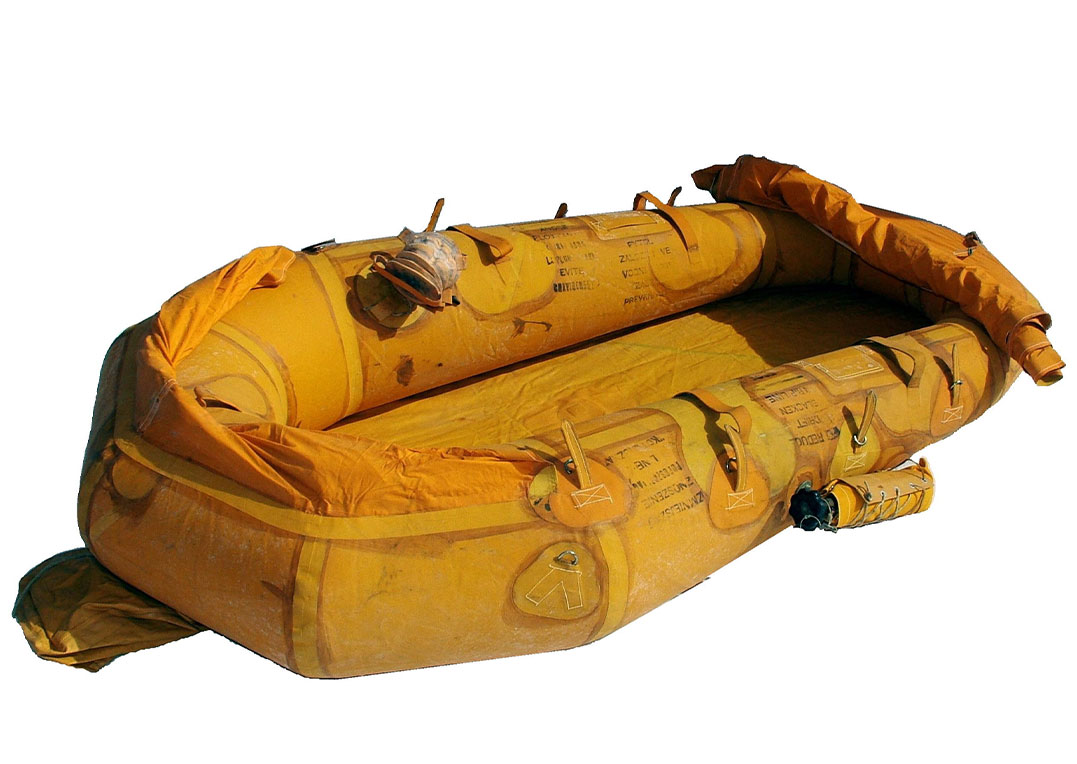
The K-Type dinghy carried by Spitfire pilots. A C02 canister can be seen to quickly deploy the raft on the right of the image and bellows to keep the raft inflated can be seen on the left.
Source: historicflyingclothing.com
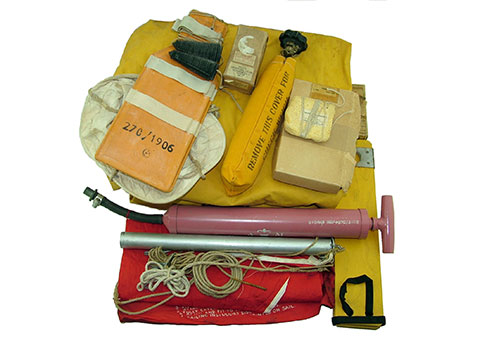
The contents of the K-type dinghy pack made for an uncomfortable seat, but undoubtedly saved lives.
Source: historicflyingclothing.com
“For a while, I had plenty of entertainment - they were still bombing the coast and there were bombers passing over and plenty of stuff coming up, and at one stage a Jerry aircraft crashed into the water about a quarter-of-a-mile from me. A little later on, I saw a light on the water which I knew must be a Jerry pilot and I didn't want any company so I sneaked away from him.
I kept paddling towards the light and as I got to the light, I thought I'd make it, I gradually found myself drifting away and realised that I'd been swept round the light and was paddling up current.
Well, I paddled pretty hard and it kept me warm and then I got a bit browned off, and I stopped paddling, and I got very cold! So I started paddling again and did plenty of exercise; I didn't stop paddling all night.”
- Geoff Galwey
He continued paddling toward what he believed to be land. After a while, he saw another flashing buoy light in the distance. This time, he was prepared and compensated for the current's sideways pull. By 5 am, after continuous paddling with just a 30-minute break since 5pm the day before, he finally succeeded in attaching his dinghy to a buoy and climbing up. With no paddling to keep him warm, Geoff had to think of another way of staving off the cold.
“Well, I started jumping up and down and I got very tired of that. Then I started doing the Charleston and I "Charlestoned" for about an hour and then I climbed up on to the light, a precarious thing and it was fairly high and a bit rough, and held myself over the light hoping that someone would see the light wasn't working.
It was very dangerous and most uncomfortable and I got very cold so I climbed down again and "Charlestoned" again until daylight.”
- Geoff Galwey
Unfortunately, poor Geoff discovered that the Buoy had a rather loud foghorn that would blast at random, but there was nothing he could do to stop it.
“Then I hung everything that I could find on the buoy, including bits of my dinghy which I ripped up and tied on to it, and decorated the thing a bit, and about eight o'clock very glad to see a rescue launch coming out to get me.”
- Geoff Galwey
The Air Sea Rescue (ASR) launch, provided Geoff with dry clothes, and transported to RAF Hawkinge. At 10 am, he managed to get on the phone to Hornchurch and asked them to dispatch an aircraft to pick him up and bring him home.
Unfortunately, bad weather again limited flying. Geoff Galway returned to the squadron the next afternoon and, according to the squadron ORB, with a noted sense of relief, he was "very little the worse.”

Jack Ratten introducing Geoff Galwey in a BBC radio broadcast which formed the quotes in the story above.
L-R: Tommy Swift(Top), Len Hansell, Jack Ratten, Geoff Galway, Unknown, Unknown, Unknown.

An air sea rescue launch similar to the one that would have rescued Geoff Galwey from the buoy.
Source: IWM (CH 9349)
The large mass of fighters that the few pilots 453 Squadron had encountered were the aftermath of the largest daylight raid by the Luftwaffe in 1942. Within hours, Canterbury was hit again by a second wave of bombers that arrived under the cover of night.
“We shall go out and bomb every building in Britain marked with three stars in the Baedeker Guide”
- Baron Gustav Braun von Stumm, Spokesman for the German Foreign Ministry
The attack on Canterbury was part of the Nazis' Baedeker Blitz, a retaliatory terror campaign in response to Bomber Command's offensive on Germany. Its aim was to undermine British morale by targeting towns rich in cultural heritage. Targets were selected from the German Baedeker tourist guidebooks; the aircraft encountered by 453 Squadron had just attacked the Cathedral City of Canterbury.
The initial indication of an approaching raid was the jamming of four Chain Home Low Radar stations at 1642 hours. Unfortunately, they did not notify the 11 Group controller until 1705 hours, which would have alerted the controllers that an enemy attack was likely.
At 1659 hours, RDF detected a single aircraft west of Cape Gris Nez heading toward Hythe. Soon after, the Observer Corps reported seeing 20 aircraft approaching, with more following. This caused confusion among the plotters due to the conflicting reports, which led to the failure of two additional diversionary raids on Deal and Manston to be included in any plots.
The 31st was a Saturday, with streets filled with Saturday afternoon shoppers, when sudden waves of bombs began exploding across Canterbury, followed by strafing attacks leaving 33 people dead and 54 seriously injured.
Newspapers writing of the raid experienced reported:
Gertrude Butler from Herne Bay, wife of a soldier in the Middle East, was the bus conductor passing through Canterbury. She and five other civilians died when a bomb exploded nearby, causing the bus to overturn. The driver narrowly escaped, pulling his coat collar up and ducking below the windscreen upon seeing the falling bomb. Another driver was killed when his bus was randomly strafed.
Six civilians were killed when they sought shelter in a large empty house after suddenly hearing Luftwaffe aircraft and bombs exploding.
P.C. Higgens died shortly after arriving at the hospital with a severe head injury. He was found on the roadside beside his bicycle, after being strafed while patrolling his county beat.
Mrs W. O. Merker amazingly escaped with minor injuries after being blown through a glass window. She was with her Flt-Lt husband and was just getting to her feet following the first wave of bombs when the second struck. Sadly, she lost a cousin in the bus attack that killed six civilians.
Ten out of eleven land girls reported to work precisely on time the day after their Canterbury billet was bombed. The remaining girl arrived slightly later, having been dug out from the debris.
Finally, an interview with a member of the Civilian Defence Depot was getting a haircut when the bombs started falling. He quickly grabbed his steel helmet and hurried out of the hairdresser's, still wearing the barber's gown around his neck. The haircut remained incomplete when he was later interviewed by a journalist.
-299-(2)_tn.jpg)
"A general view of damage to St Augustine's Abbey and the surrounding area, following the devastating Baedeker raid on Canterbury. Shops in the foreground have lost half their roofs, and timber and debris is all that is left of several other buildings along the road leading to the Abbey. A salvage truck is visible in the centre of the photograph."
Source: IWM (C 3404)
(This photo has no date and may be from another Baedeker raid which took place June 1st, 1942)"

Plotting records from the inquiry into the Canterbury raid show the plotted paths of two of the raids and the waiting withdrawal cover over the Channel outside of Deal and Dover.
Source: TNA AIR 16/557
"Jack Ratten got his Sq/Ld and took over the Squadron from Morello. Old Tony look as though he’s had it."
- Russ Ewins
By the 1st of November, it became evident that S/Ldr Tony Morello's health was not improving. He was assigned as a supernumerary staff member with the Hornchurch station staff before moving on to the No. 1 Air Armament School. The squadron headed into London to celebrate Jack Ratten's promotion to Squadron Leader at the Watling. The night nearly took a turn for the worse when a sailor attempted to start a brawl with several of the squadron's ground sergeants. However, the situation was defused with humour when a civilian challenged the sailor to a duel at twenty paces with butter knives.

Jack Ratten in one of his Spitfires which were named "Tikkie" after his wife. One newspaper listed the illustration as a New Zealand charm, however it is quite likely the sign of the "The Saint," a popular book series written before, during and after the war.

Kel Barclay who took over as OC A flight after Jack Rattens Promotion
On the 4th, several Sergeants who had interviewed for their commissions received the news that they had been promoted to Pilot Officers. Wes White, Bill De Cosier, Hal Parker and Len Hansell all sewed a stripe to their shoulders. Sadly, Ben Nossiter's promotion came through at the same time posthumously. Al Menzies, who had been killed with Ben, had also received a posthumous promotion a week earlier.
F/Lt Kel Barclay was posted to the Squadron and took over as the Officer Commanding (OC) of A Flight, a position that had been vacant since Jack Ratten's promotion. Gerry Whiteford, a Drem Boy and one of the original first five pilots to arrive at RAF Drem, was posted to 129 Squadron. Shortly afterward, Ricky Rickard and Ernie Esau were posted in to 453 Squadron.
On the 6th of November, Russ Ewins made the squadrons first claim in his logbook. It can be safely assumed this would not have been accepted by ops, and not just because he didn't have his gun camera on.
"Spitfire - FU-S - Low Flying - 0:50 - 1 Seagull confirmed, Engine change to S"
By the 19th of November the squadron had been grounded for over 5 days followed by a sprinkling of convoy patrols, standard affair - “No incident”. Things were getting a bit much in B Flight.
"Thoroughly brassed off with no flying. Russ Ewins and I scrounge a rhubarb to Knocke in Holland, Operations cancel it just as we’re about to take off as the area is lousy with Hun patrols and so far away one has not the gas to fight with, need it all to get home.
The control tower fired a red light at us but we ignored it and whistled smartly off; Ops called us back over the R/T but “we were to low to pick up the message - never heard a thing” - Much!
I shook my head vigorously to Russ when the recall came over and he grinned back as we skittled out to sea wing tip to wing tip.
Luckily for us, no doubt, the cloud cover broke so we did not penetrate but did a shipping reconnaissance right down the coast past Knocke, Blankenberghe, Ostend, Dunkirk, Calais, then swung west over Dover and back to base after having been away for 1.20 minutes - Naughty, naughty boys!"
- Len Hansell
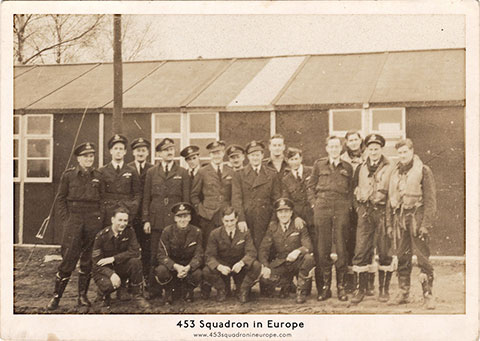
Squadron photo during their days at the Hornchurch sector

L-R: Len Hansell, Dick Darcey, Freddy Thornley, Russ Ewins, Ernie Esau
New movement orders were issued for the Squadron to join an air-firing course at Martlesham Heath on the 23rd of November. Naturally the soup rolled in and they didn’t arrive until the 24th. This course was highly regarded as an extension of the renowned Sailor Malan's School of Gunnery at Sutton Bridge. The school provided comprehensive training lectures covering important topics such as range, line of flight, deflection, and how poor flying could lead to gunnery errors. This program was complemented by gun camera exercises on manned aircraft and live firing at target drogues.
"At present I am at another station doing a course on gunnery. The ground staff here is amazing. I am used to staggering in and out of the plane by myself, but, here, as soon as one starts to walk out to the plane, about three 'Erks' start running towards it, and by the time the lordly pilot has arrived at leisure they have everything in the cockpit ready.
One of them assists me with my parachute, another helps to strap me in, closes the door, takes a final look around the cockpit, and then jumps down off the wing and the engine is started.
On arriving back the service is just as good. As soon as I arrive they grab the wings and practically push the plane into position. One of them then jumps up on the wing, opens the door, undoes my straps, grabs my arm and tells me to mind the oil on the step.
Then one of them solicitously enquires: 'Everything O.K., Sergeant?' Everyone then gathers round and listens attentively while I explain how its flying about 'right wing low and the engine doesn't sound just right.' I don't suppose they do anything about it, but they do listen so nicely."
- Jim Ferguson in a letter home
The Squadron excelled, achieving the highest average score ever recorded by a squadron. Norm Swift surpassed expectations by breaking the record for the most hits ever achieved.

Rusty Leith's notes on the .303 Armour piercing round.
Image courtesy of friend of the website www.rustyleith.com

Rusty Leith's notes on the cone of fire created by the Spitfires weapon harmonisation.
Image courtesy of friend of the website www.rustyleith.com
On the 7th of December, the Squadron completed its course at Martlesham Heath and moved directly from Hornchurch to Southend, where they would remain for several months. Aside from a minor issue when one of the moving lorries broke down, the pilots arrived in Southend by 11:30, welcomed by their ground crews. Many of the pilots were pleased to be back at their former station and looked forward to visiting a few familiar haunts they had frequented just a month earlier.

453 Squadron back at the RAF Southend mess , a requisitioned manor house said to be the residence of the Boleyn family in the 16th century.
Back L-R: John Barrien, Unknown (likely Ricky Rickard), Hal Parker, Fredd McCann, Ernie Esau
Front L-R: Dick Darcey, Geoff Galwey, Tommy Swift, Bill De Cosier

Aboard one of the MT lorries.
L-R: Unknown (possibly Dick Long), Wes White, Tommy Swift (top), Len Hansell, Ernie Esau, Russ Ewins.
At 9:20 AM, the skies around RAF Southend came alive as A Flight began a series of convoy patrols, led by Dick Long, with Bob Clemesha joining him for the first patrol of the day.
Meanwhile, B Flight remained at dispersal, with a section on immediate readiness for air defence, while the others maintained a 30-minute standby. It was a foggy morning, with clouds covering the sky completely at heights from 500 to 1,000 feet.
Operations had come through with a shipping reconnaissance sortie which landed with B flight. Slim Yarra was to lead a formation of six as Red 1 with Bill De Cosier flying as his No.2. Len Hansell found himself leading for the first time after Slim put him down as Yellow 1, Jack Stansfield Yellow 2. Ernie Esau led Blue section, supported by Dick Darcey.
At 1100, six Spitfires roared across RAF Southend in a line abreast formation take off. Staying low to keep off enemy radar, the Australians charged across the countryside at zero feet, hedge-hopping their way out to the coast, where they dropped down and skimmed out to sea. A glance in the mirror showed the shores of England getting smaller and smaller until they were gone and the Spitfires were surrounded by miles and miles of sea. They were happy enough to be flying, no longer cooped up at dispersal but out on what: “we thought was going to be more or less an anti-monotony stooge”.
In front of them, the Belgian coastal city of Blankenberge appeared from the murk. Slim dropped a wing and turned the Spitfires to port as they swept up the coastline towards Holland with eyes scanning for any signs of German shipping. At the mouth of the Scheldt, the Spitfires skimmed past a Dutch fishing fleet, the sailors waved to the Allied Airmen as they sped by.
They continued past Flushing, scanning the sea around them when Slim spotted five ships a mile off land making their way up the coast.
Slim keyed his R/T: “Ok fellows, let's go over and have a look at these boys” before banking the formation away from land and in a direct line towards the convoy.
A fierce barrage of flak erupted from the convoy as the Australians charged toward the ships. Moments later, an unseen shore battery opened fire on the Spitfires, trapping them in a hellfire of flak bursts and tracer rounds. The pilots knew well that danger did not end with the tracer rounds lashing past them; for every visible round, there were hundreds more, invisible to the naked eye, ready to shred their aircraft to pieces.
Heavy flak exploded above the water, sending up dense clouds of spray. The smoke that lingered in the air obscured the Australians' vision. Their Spitfires rocked and jolted under the pressure waves of the explosions around them. It felt like an eternity as they weaved and skidded through the firestorm, drawing closer and closer until finally, they were ready to strike.
Long belts of metal-linked of .303 ammunition danced through the feeds of box magazines, drums of 20mm explosive cannon rounds unwound in rapid clockwork, bolts thrashed through receivers, muzzles flashed and streams of spent cartridges fell from their wings as the Australians traded tracer with the Kriegsmarine.
Slim Yarra led the attack and dived on the flak ship, which was the source of most of the gunfire. Bill De Cosier targeted the next ship, while Len Hansel lined up on the third ship and “gave it the works” with a firm press of his thumb through the centre selection of his fire button. With a hard kick of the rudder, he side-slipped within feet of the German ship bow before skidding and weaving his way back out to sea. The rest of the formation followed suit, targeting the remaining ships.
The Spitfires left behind bodies sprawled across the decks of the vessels they had attacked. From one of the ships, a plume of smoke rose 150 feet into the sky, serving as a testament to the destruction caused. But the damage inflicted hadn’t been one sided. Red section had received the wrath of the flak ship.
"I saw Billy streaming white glycol fumes and knew his game was up, that his engine would only last a few minutes … Billy didn’t last long … he pulled up in a vain effort to gain altitude, stalled and went into cold dark ocean like plummet without any attempt to bail out."
- Len Hansell
Slim Yarra had also fallen victim to the convoy's gunners as flames licked around his aircraft. Unlike Bill De Cosier he managed to climb to 1,000 ft, high enough to bail out. The remaining pilots could do little but watch the tragedy unfold as Slim leapt from his cockpit only to get pinned against the tail of his Spitfire, which nosed down and started its plummet earthward.
Slim must have tried to open his parachute in the hope that it would break him free, but either the lines must have tangled or the turbulent air behind the aircraft failed to deploy the chute leaving a twisted stalk of silk steaming behind the Spitfire. At the last minute, Slim managed to break free and seperate from the Spitfire.
The wayward mass of flaming Spitfire struck the water followed moments later by its pilot, Slims unopened parachute trailing behind him.
"We climbed up to give them a Mayday just in case air sea rescue could get a fix on them, then dived away again on the deck to our long, long trip home. After what seemed like an eternity we got back within R/T range and got a “homing” to Manston through fog and cloud which had closed in.
The huns looked for us on the way home and got pretty close near Manston so we went up into cloud and flew “blind” for the last 15 minutes as we had no ammunition and very little petrol. Reported to Intelligence, Operations and Group, then back to base (Southend).
Strangely enough this was the first “do” the flight or squadron that I have not flown No.2 to Slim Yarra, Billy De Cosier flew No.2 to him while I led another section of 2 - strange. They were two damn good eggs even though - but that is gone now"
- Len Hansell
Slim Yarra was 21, Bill De Cosier was just 20. Like Ben Nossiter, Al Menzies and Jim Furlong lost before them in service of the Hornchurch Sector, neither were ever recovered. Their names can be found amongst the bronze panels of the Roll of Honour at the Australian War Memorial and the stone walls of the Runnymede Memorial.

Slim Yarra in his Spitfire “Ned V”
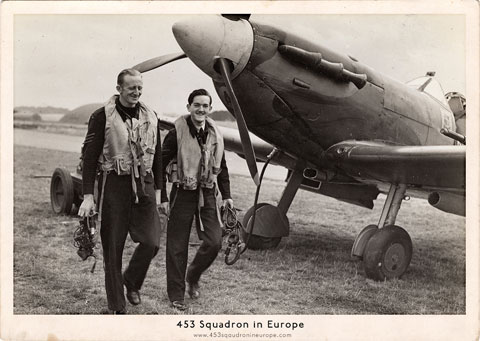
L-R: Wilfred "Snow" Waldron, Matt “Bill” De Cosier
On the 14th, a replacement Spitfire arrived at Southend to replace those lost in the action on the 10th. Both the Squadron and Southend Station ORB recorded the difficulties the squadron was having with its Spitfires.
“A replacement aircraft arrived to 453 Squadron, which was a good thing as most of those on strength were getting tossed out, and in view of the fact that the squadron was equipped with Spitfire Mk Vbs, no brand-new aircraft were procurable. Those in strength were elderly and consequently the amount of work that had to be done on them to keep them serviceable was abnormally high, with the result that a heavy strain was put upon a very much under-strength ground crew.”
- 453 Squadron ORB
The squadron ORB signed off the month of December with an understandably frustrated assessment of the Squadron's lack of adequate aircraft, as well as an understaffed & overstretched servicing echelon that had the unenviable task of maintaining them.
The following extract from the ORB is a little hard to follow, even after being cut down. In fact it took this amateur researcher two reads before he could grasp it. One might imagine an exasperatedJack Ratten unleashing a frustrated monologue, all the while a poor squadron clerk frantically tapping away on his typewriter as he tried to keep up.
"It has been mentioned earlier in the record for this month, very considerable difficulty is being caused by the fact that the strength that the Squadron in aircraftsmen (Ground crew), is fully 20 below that which is laid down by the establishment.
In spite of the fact that nearly all the aircraft now held are approaching major inspections, a high state of serviceability has to be, and is being maintained. Further, it is understood that the operational hours of this Squadron equal, if they do not exceed, those of any other squadron in Fighter Command.
In view of these things, the ground crews are severely strained ... So far however, our appeals have been met with no response; on the other hand, postings from the squadron are being made frequently, and although efforts are made to resist them ... those efforts are not usually very successful.
As the question of strength has been mentioned ... The establishment provides for one Flight-Sergeant, two Corporals and two aircraftsman.
In fact, it is found that the minimum A.C.s for duties which are essential is eight, and this figure allows nothing to spare for things which certainly should be done by a ACH.s A.C.S. It is fully appreciated that the shortage of a ACH.s is is acute, but if only two are held, it means that duties which should be carried out by them must be done by tradesmen."
- 453 Squadron ORB

Herb McKinnon, then Corporal who would later become the chief engineer of the 6453 Servicing Echelon.

Servicing echelon in one of the Spitfire Mk.IX's later used at RAF Hornchurch.

Two members of the servicing echelon with S for Sylvia.
"New F/Commander arrived. Don Andrews, Hurri Bomber chap, plenty of experience and seems a good type"
- Russ Ewins
F/Lt Don Andrews was posted in from 175 Squadron as OC B flight, relieving Russ Ewins, who had been the acting Flight Commander since the loss of Slim Yarra. Wes White, another of the Drem Boys, left the squadron on the 21st with a posting to the Middle East. He was killed while flying as a passenger on June 3rd 1944, when the pilot of his Dakota accidentally crashed into a mountain in north-west Algeria.
The Squadron had been slated for an escort job to Flushing on the 24th of December, but the Soup once again rolled in and the “do” was called off. The soup hung around for 5 days, perhaps thankfully over the Christmas day period, allowing the Squadron to have a proper celebration.

Don Andrews who replaced Slim Yarra as O.C B Flight.

Wes White (top) and Ben Nossiter.
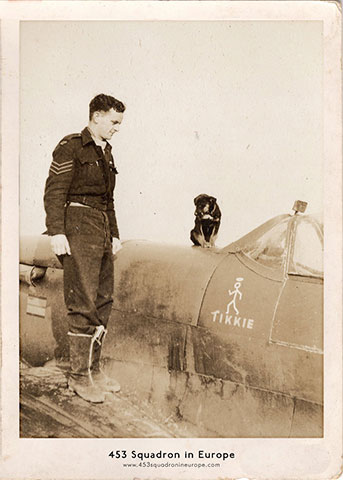
Jim "Fergie" Ferguson of B Flight.
Christmas dinner was a large affair. It was a tradition for all senior non-commissioned officers (NCOs, sergeants, and flight sergeants) and officers to serve Christmas lunch to the lower ranks, which included every pilot in 453 Squadron. There was a party of approximately 500 to 600 other ranks, including ground crews, WAAFs, and the RAF Regiment. A popular pastime was signing lunch menus, which personnel kept as mementos of significant events. The Australians found themselves signing these menus by the hundreds.
After everything was wrapped up, the officers and pilots retreated to the Sergeant's mess, where they enjoyed a grand turkey dinner prepared by the station's catering officer. Jack Ratten had volunteered to tend the bar for the evening at the airmen's dance, which was primarily for the lower-ranked personnel. Unfortunately, he found himself so busy that he only managed to pour himself two drinks throughout the entire night.
"Sunday 27 December 1942. Christmas has come and gone and I still have to see a white one. As is customary in the RAF all the officers and senior NCO’s waited on the airmen at Xmas dinner on Thursday (actually Friday). It was really good fun and I enjoyed it. That job over all the officers came up to our (Sergeants) Mess for drinks for a short while. Then about 2.30 we sat down to our dinner. We had an amazing meal for a wartime Xmas. Soup-fish-turkey-spuds-beans- brussels sprouts-mince pies-Xmas pudding-brandy sauce. Apples, oranges, biscuits, cheese, rolls, beer, soft drinks, coffee and dates.
The layout of the tables was a great sight and I wish I could have taken a snap of them. I think I sampled everything on the table bar the H.P. sauce. We had menus and I am sending mine home along with one of the airmen’s dinner and the officers if I can get one. We all remarked that the best kind of leaflets would be in the form of a snap of the Xmas dinner tables.
After dinner we all retired to the fire to relax. The bar opened at 1 p.m. Xmas day and did not close till after 2 a.m. on Boxing Day. Needless to say quite a lot of booze was consumed by some people but I did not have very much. There were numerous parties going on all the time in and around the village but my only venture was up to a local pub to have a few beers with the C.O.
Naturally it was an open night in the Mess and dancing started about 9 p.m. We have a new room in the Mess and it makes a marvellous cabaret, with chairs and tables round the side and a bar at one end. I finally got to bed about 2 a.m. and I was very tired. Others came in later but funnily enough not a soul stirred till 9.45. I had a shock when I woke and saw daylight coming in under the blackout curtains.
Yesterday was a very quiet day indeed and everyone was very subdued. Last night was another fun night in the Mess with much the same procedure as Xmas night. However, I was a bit tired so did not go to the dance. The festivities really began on Xmas Eve when we all went up to the Officers Mess to a party up there. It was quite good and did not last too long."
- Rusty Leith in a letter home
1943 started with a fizz, a cloudy day unfit for flying. Perhaps the best thing for some equally cloudy minds left after ringing in the new year. The routine started again, standing patrols, convoy duties and sweeps.
On the 8th, Jack Ratten dedicated a chunk of the day to practising a new formation he had devised.
“The famous Ratten formation” as Len Hansell put it, made changes at the section level. Rather than a section flying in line astern while weaving, they moved the second element into line abreast with the first. The result was that each section flew in a box-like formation as can be seen in the diagram from Russ Ewin’s diary.
"The CO gave us the good gist on operations for the spring. Fighter sweeps are out and each op will be with bombers and fighters will be on the offensive looking for trouble.
Trying out a new formation

Russ Ewins logbook and diary

Russ Ewins diary showing the organisation of the Ratten formation
Flying wide apart and each sub-section will be able to break away and bounce. Not as defensive as three lines of four but a good offensive formation."
- Russ Ewins
Interestingly, the formation appears to be one step between the finger four formation that the squadron would move to in July 1943.
The flu swept through the squadron in the latter half of January, significantly reducing the capacity of the squadron.
On January 20th, with a considerable number of their pilots confined to medical bays, the squadron was put on night readiness after 28 Fw.190s sprang from the Channel in a lightning raid on the London Docks.
Likely anticipating a follow-up raid similar to the one that occurred on October 31st, A Flight was stationed at RAF Southend, while B Flight moved forward to RAF Manston. The squadron remained on night readiness throughout the night. Although no further attacks occurred, this incident perhaps highlights the anxiety of Operations when mobilising a half manned squadron of Spitfires, which were notoriously bad for night interceptions.
The next day, despite the illness among the aircrew, the Squadron pushed through and managed to achieve it's second highest amount of convoy patrol hours in one day when it peaked at 52.05 hours. On the 23rd and 24th, 13 pilots were hospitalised due to fevers. By the 27th, Freddy Thornley found himself in charge of B Flight after F/Lt. Don Andrews and his Deputy Commander Russ Ewins were also brought down by the Flu.
Bad weather limited flying opportunities for the remainder of the month, permitting only a few convoy patrols, perhaps not a bad thing for those remaining healthy pilots who found themselves overstretched trying to cover the gaps in personnel.
S/Ldr Bill Crawford-Compton of 64 Squadron was leading the Show, while W/Cmd James Slater led 453 Squadron, filling in for Jack Ratten, who was still away at a training course. 453 Squadron settled into formation alongside the Spitfire Mk IXs of 64 and 122 Squadrons, racing low over the English countryside as they headed north. Shortly after take off, Fred McCann turned around with Spitfire issues. Undeterred, he jumped in a new Spitfire and must have flown hell for leather to catch up but he was out of luck.
This operation marked the first time the Squadron would serve as escorts for a bomber formation. They were accompanying 12 Venturas on an attack against the Contrai airfield as part of Circus 258.
A Circus was a bomber mission designed to lure the Luftwaffe into aerial combat rather than a focus of the bombers destroying ground targets. A crucial aspect of Circus operations was that the radius of action had to be limited by the operational range of the fighters.
Bomber escort could take shape in multiple layers of protection. When stiff opposition was expected, top and high cover squadrons could be employed. These squadrons would fly high above the bomber formations, ready to swoop down on any attackers. In certain situations, such as a Circus operation where the objective is to engage the Luftwaffe, up to two-thirds of these forces may be released to pursue the enemy.
Escort cover squadrons operated one level above the bombers, acting as a guard for the close escorts with the goal of intercepting enemy fighters before they could reach the bomber formations. Close escort squadrons remained near the bombers at all times and were not allowed to break away to chase enemy aircraft.
Cover could be provided partway through an operation by cover support squadrons. Target cover squadrons would establish air superiority over the target area a few minutes before the bombers and their escorts arrived. Forward cover squadrons acted as a blocking force in the forward area of the operation covering the withdrawal of the bombers. Withdrawal cover squadrons could be put in place during the final phase of an operation, escorting bombers on their last leg home. Withdrawal cover was often used to bring long range American bombers home in the early days before the arrival of long range escort fighters.
Over Bradwell Bay, the Spitfires of the Hornchurch Wing rendezvoused with 12 Lockheed Ventura medium bombers of 21 Squadron and the Spitfire Mk.Vb’s 308 Squadron (Poland) before the force of aircraft turned and crossed into the North Sea 0 ft. 453 Squadron positioned itself around the first formation of six Venturas, which found itself surrounded by 12 Spitfires on all sides. Meanwhile, 308 Squadron aligned itself with the second box of Venturas.
“The squadron did frequent, what we called sweeps, they were fighter sweeps where we would go across there hoping to have a … well, we’ll see what happens. The Germans said "that's a waste of time fighting those blokes flying up there," it wasn’t accomplishing anything.
Then we took in fighter-bombers (Mostly Westland Whirlwinds) for a while, we’d escort them. Then we took in bombers, we’d escort a squadron of bombers, we’d have four along the right side, four along the left and four behind. And a couple of squadrons up there as top and high cover, ready to come in should there be any trouble.”
- Jim Ferguson describing 453 Squadrons evolution of operations towards 1943 and the concept of close escort to bomber formations.

Russ Ewins logbook and diary showing the Febuary 3rd operations and the close escort formation used by 453 Squadron.
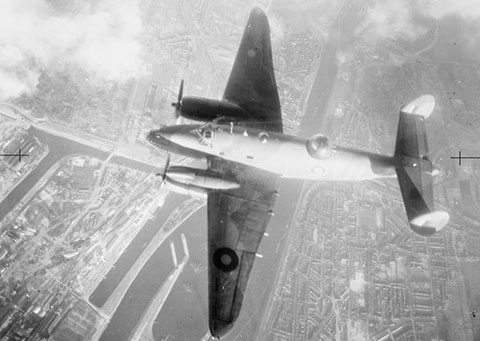
Lockheed Ventura of No. 21 Squadron over the docks at Ijmuiden, Holland, during the second of two daylight attacks, on the coke ovens of the Royal Dutch Steel Works, 13 February 1943.
Source: IWM (C 3404)
Ten miles north of North Foreland, the entire formation had to swerve sharply to port when they found themselves on a collision course with an undisclosed northbound shipping convoy with its balloons deployed.
As they crossed into the North Sea heading towards France, the pilots made glancing checks against the clock in their lower left instrument panel. As the minute hand neared nine minutes of flight time over water, the pilots readied themselves. Moments later, the aircraft rose as one and began to climb toward the enemy coast.
The Bombers were briefed to climb to 13,000 ft, the Spitfire Mk.IX’s of 64 and 122 Squadron above them at 16,000 ft. About three-quarters of the way across the North Sea, the formation encountered heavy cloud cover at 7,000 feet as they climbed through to their briefed heights.
Nothing could be seen beneath the formation of aircraft through the thick layer of clouds as the minute hand ticked past the estimated time of arrival at the target. For three minutes, the bombers continued on their straight path past the target and it soon became clear that the mission would have to be called off.
With the bombers tuned to a different radio frequency, Bill Crawford-Compton dived in front of the lead box of Venturas, waggling his wings and turning to starboard to try to signal that they needed to abort the mission. The bombers turned back and for a few minutes they followed the correct north-westerly vector of the planned egress route before suddenly changing course to the south. At this point, Bill faced a difficult decision and ultimately ordered the Spitfires from the Hornchurch Wing to disengage from the bombers, as they were rapidly reaching the operational limits of their fuel capacity.
64 and 122 Squadron's remained high at 18,000 ft as they made their way toward the coast. W/Cmd Slater, leading Squadron 453 Squadron and unaware of their location, descended to an altitude of 4,000 feet. As they crossed the coast between Calais and Gravelines, the Germans opened fire, with an accurate line of flak bursts trailing just behind the Australians.
The target support Spitfire Mk.IX squadrons of the Northolt Wing, which had taken off 40 minutes after the other squadrons, got no further than West Malling before being recalled by operations “on account of dirty weather”. This left 308 Squadron, which had been escorting the second box of Venturas, to face the enemy alone while outnumbered by swarms of Fw. 190s that approached from 2,000 to 3,000 feet above them.
In the ensuing battle as they fought their way toward the Channel, 308 Squadron claimed one probable enemy aircraft, while the gunners of 21 Squadron reported one confirmed kill and one damaged. However, the Luftwaffe inflicted significant losses on the vulnerable formation. 308 Squadron lost four Spitfires, resulting in one pilot killed, two taken as prisoners of war, and one who managed to evade capture and return to Allied forces. 21 Squadron lost one of its Venturas, with all crew members on board. Although they reported seeing two parachutes deploy, the entire crew was killed in action.
Jack Ratten returned later that day and led the Squadron on its second close escort job in Circus 259, which successfully bombed the marshalling yards at Abbeville, but drew no response from the Luftwaffe. The squadron maintained a high rate of close-escort operations for the remainder of February.
Aerodrome defence was another form of immediate readiness, leaving pilots tied to their dispersals, decked out in everything but their flying helmet and gloves. The 27th gave rise to the comment in the Squadron ORB “This incident appears to indicate that the value of having pilots and aircraft on aerodrome defence is not as great as it might be.”
"I had a few very exciting seconds since I last wrote. I was sitting in dispersal (hut) with my No.2 on readiness on a bad morning with low cloud and poor visibility. Suddenly we heard the roar of engines and dashed out to see a Hun bomber tearing across the drome with its cannons and machine guns blazing. The ground gunners answered and there were tracers flying everywhere. Everything was over in a second and the plane had disappeared over the tree-tops.
It saw one of the lads cycling down to work and opened fire on him. The lad hurriedly went to earth with bullets whizzing all round. It passed over him so close that he could see the crew and the number. He arrived at the dispersal untouched but very shaken. That is typical of what the Hun is doing now.
Sneaking in and dropping the odd bomb and doing a bit of shooting up. It doesn’t do them any good and certainly doesn’t worry us. I cursed my luck as if only I had been the air as I should have been had the proper people told me, I would have had the chance of a lifetime. It seems to me that I am bound to miss these things. I would have had first shot as I was the leader of the section that would have been up."
- Rusty Leith in a letter home
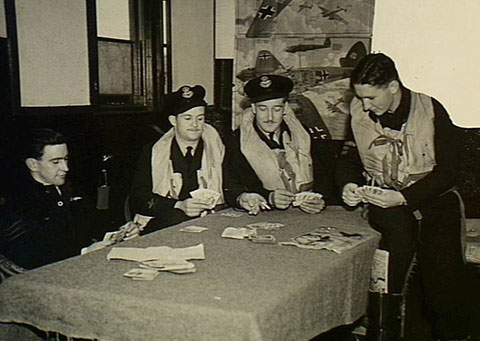
Killing time on readiness.
L-R: Lawrie Cronin, Tommy Swift, Johnny Barrien, Rusty Leith

A Luftwaffe Dornier Do 217 in flight
"A Dornier Do 217 passed over the aerodrome at 08.40hrs. 453 Squadron had a section on aerodrome defence, but although the enemy aircraft had dropped bombs in the neighbourhood of Romford, the section received no information of its presence until they saw it crossing the perimeter track. It was then, of course, too late for anything to be done.
It should, perhaps, be mentioned that Flight Sergeant Wood of ‘B’ Flight had an earlier view of the enemy aircraft. He was machine-gunned as he was cycling from the Sergeants’ Mess. He did not get hit, but he complained that he could not steer his bicycle because of the strikes he saw on both sides of the front wheel!"
- Southend ORB
The excitement continued into the afternoon when Don Andrews led out Ernie Esau on a special shipping reconnaissance of the enemy ports, a decidedly unhealthy activity. The pair launched into foul weather conditions, with a heavy layer of cloud cover spanning from 500 to 700 feet. Thick haze reduced visibility to three miles, and it became even lower when the Australians had to navigate through several rain showers.
The two aircraft maintained an altitude of 0 feet, only climbing briefly to gain a view of the ports giving the enemy gunners a clear view of their Spitfires, which came under an intense barrage of flak near Flushing and Westkapelle. After an hour and 20 minutes, the pair landed at RAF Manston, bringing back a significant amount of information that no doubt pleased the sector spies.
The remainder of February was relatively quiet or frustrating, cancelled show, escorts where the bombers were unable to bomb due to 10/10ths cloud cover over target, a sweep or two where the Huns were up, but not seen.
On the 1st of March the Squadron was put on 24 hours' notice to shift camp. The next day, left for RAF Westcott under a veil of secrecy. RAF Westcott was a large airfield, used as an Operational Training Unit for Wellington bombers.
"A couple of Mustang units are also based there for the “do,” the details of which would make interesting reading but are very taboo for security reasons. Our convoy of ground crew and kit arrived at night and things are teed up for an early start."
- Len Hansell
The “do” was Exercise Spartan, a large combined arms manoeuvre across southern England. The exercise centred around the crossing of the Thames by the forces of “Southland”, which had just made a landing in the semi-hostile country. The objective of the Southland forces was to secure a bridgehead and capture Eastland's capital city.
453 Squadron made up one of six Spitfire squadrons of the Eastland forces who were told hold off the Southland assault, and for anyone wondering who Eastland was:
"We were the huns"
- Russ Ewins
To help identify Eastland aircraft, a white stripe was painted from the nose to the rear of the cockpit. Additionally, to aid ground forces in recognising the planes, the underside of the port wing was painted black.

Hawker Typhoon Mark IBs of No. 183 Squadron RAF. The aircraft are wearing the temporary markings allotted to "Eastland" forces during the manoeuvres.
Source: IWM (CH 18119)

Original wartime caption: Refuelling a MUSTANG aircraft used on Air Cooperation work.
Source: IWM (H 27840)
In reality, the Southland forces were the First Canadian Army acting as the allied forces and the Eastland were British Troops acting as the Germans. The key bridgehead was over the Thames river and the capital city they were to capture was the Cambridgeshire City of Huntingdon. The exercise put to the test untried commanders, units, logistics, tactics and the ability of allied troops. Importantly, it put several untried capabilities of the allied forces to the test, including the coordination and cooperation between air and land forces.
The first day consisted of nothing more than a few sector reconnaissance flights before the weather rolled in and grounded the squadron for a quiet day in the mess. Less quiet was the evening in the Sgt’s mess after the White Swan closed, which followed with a reminder in the daily routine orders that officers were not allowed in the Sgt’s mess without express invitation of the mess secretary.
"Squadron blacks (short for a black mark against your name due to an infraction) left and right … he evidently took a very dim view of our harmless little jokes!"
- Len Hansell
The next day saw the squadron escorted recce Mustangs way down into the south of England at zero feet, including the “shooting up” of a few army concentrations. The majority of the squadron's activities revolved around escorting recce mustangs, bombers, and beating up ground troops, followed by an umpire in their own aircraft. While the exercise provided ample opportunities to test the allied forces, not everyone took it as seriously.
"Claimed severely damaged troops, killed anything from 2-300 many of them standing and looking up instead of darting for cover."
- 453 Squadron ORB
"Just arrived down at dispersal when soon after dawn six "enemy" Spits came over and shot hell out of the place, much weeping and gnashing of teeth and binding about the useless inefficiency of operations control, we should have been off the ground half an hour earlier. Then they woke up and got their fingers partly out and sent Don Andrews with Graham Harris, Fred McCann and Evan Rickard on an escort job to a photographic Mustang. That left poor little me in charge when the phone rang again and the rest of us were ordered down to Tring to shoot up army trucks etc about 100 miles SW, so I gathered around me Noel Gray, Norm Swift, Clemesha and Mack McDermott and beetled smartly off, even though we had been "destroyed" a few minutes earlier."
- Len Hansell

"Southland" troops defending a bridge against 'enemy' aircraft.
Source: IWM (CH 6461)

Troops putting land mines (represented by bricks) to delay the British advance.
Source: IWM (H 27846)
A few days later, after more army beat-ups the Squadron moved to RAF Newmarket, a massive bomber drome that by comparison “Southend would fit into a corner of it”. The aerodrome hosted Short Stirling units, while fighter units had been conducting exercises for the past week, the “bomber boys” had been carrying on with the real thing as they crossed the channel into Europe each night. The casualties suffered by Bomber Command weren’t lost on fighter pilots, each of them knew someone from training who ended up in a bomber unit, and they knew they statisics of survival.
"Last night they (bomber boys) had a night off due to fog and just did they make whoopee in the mess, chairs were smashed in the horseplay, feathers from the cushions scattered all over the place, patches of spilt beer around. It looked rather amusing to see all the officer boys, POs, FOs, F/Lts, S/Ldrs and the old wing commander, several of them with gongs up crawling around the floor on their hands and knees picking up feathers etc. Those bomber boys earn all their good times"
- Len Hansell
Once again the flu plagued it’s way through the Squadron with Ernie Esau, Dick Darcey, Geoff Galway, Jim Ferguson and Russ Ewins all grounded by Henry Sharpe, the Squadron Medical Officer (MO).
"At the conclusion of the exercise, it was clear that in general a more thorough understanding of the limitations and capabilities of the Air Force was required by Army officers while the R.A.F. required toughening and training in living under field service conditions.
In particular, it was evident that the combined service unit known as the Army Air Support Control was too cumbersome an arrangement."
- RAF Air Defence of Great Britain Vol V
The outcomes of the exercise significantly contributed to the raising of the 2nd Tactical Air Force, a formation which 453 Squadron joined less than a year later and followed into the Allied invasion of Europe.
The "ceasefire" for Exercise Spartan was announced at 9 AM on March 12th. The squadron took off at 11 AM and returned to RAF Southend to learn that Fw. 190s and Ju. 88s had just bombed London, RAF Bradwell Bay, located 10 miles to the north, and the nearby town of Romford.
"Just like our luck to be off duty when a chance like this should occur - lousy!"
- Len Hansell
Rumours started around the 20th of March when Russ Ewins and Geoff Galwey spent the day attached to 122 Squadron to familirise themselves with the Spitfire Mk.IX. Days later, the rumour went into overdrive when S/Ldr Jack Ratten and the two Flight commanders Kel Barclay and Don Andrews were called up to the Hornchurch sector headquarters.
"We see from yesterday's news that the Jerries are moving up fighter strength into the area immediately across the Channel so we can expect a hotter time on our sweeps when we go back. Seems the shooting season is about to commence at long last."
- Len Hansell
Movement orders arrived that the squadron was being posted to RAF Hornchurch, and most importantly Spitfire Mk.IX’s on the 27th, but not before Rusty Leith pulled off one last operation out of RAF Southend.
The day started overcast over RAF Southend and stayed that way, a thick, complete cloud base from 2500ft with a haze bringing visibility down to 2½ miles … perfect day for a Rhubarb, or at least that's what Rusty Leith thought.
With Spitfire Mk.IX’s on the offering the next day, he didn’t attract many takers for his plan. But persistence paid off, and Bill Morath agreed to join him if he could pull it off. Much to the chagrin of his Flight Commander, the CO and his ground crew who were packing up to hand over their Spitfires Mk.Vb’s, Rustys Rhubarb was approved by Operations.
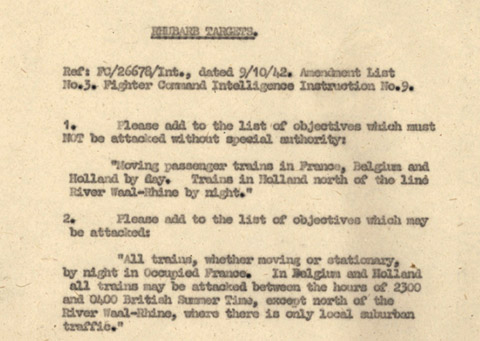
Fighter command Rhubarb instructions from the 453 Squadron A and B Flight crew orders book.
Source: NAA: A11335, Z2
_tn.jpg)
A Spitfire Mk.Vb sweeping low across the countryside.
Source: IWM (H 27934)
"On 17 october 1941, Fighter Command issued a memorandum on Rhubarb patrols, the intention of which was ‘to keep the enemy defences in a high state of readiness and to interfere materially with the working of his war machine."
- RAF Air Historical Branch: The struggle for air supremacy
Rhubarbs were a small, freelance fighter sweep against ground targets that took advantage of bad weather. A Rhubarb would generally start with pilots creating and submitting a flight plan and a proposal to Intelligence for approval by sector operations.
Pilots would take off and cross the channel at low level before making land fall into France or Belgium. After crossing the coast, a short climb into low cloud could also be used to cover their moments with the leader fixated on his blind instrument panel and his wingman sticking to his wingtip through the low visibility. Holding a set speed on a set vector for a set time could allow them to drop out of cloud at the start of their Rhubarb course before anyone had seen them.
The low flying Spitfires would strafe any targets of opportunity as they flashed by at deck height. If the cloud cover broke they would be visible for anything scrambled interceptors, the low altitude made them susceptible to anti-aircraft fire, the reliance on bad weather in itself posed a risk. It was dangerous work with many arguing whether the benefit outweighed the clear risks from the ever-growing list of pilots failing to return.
With the roar of Merlins, Rusty and Bill tore across the grass field in what was 453 Squadron's last operational sortie out of RAF Southend. The pair swept across Belgium and into France, dodging power lines and leaving a trail of destruction behind them. The Germans offered weak resistance as flak guns shot futile streams of tracer fire from weapons manned too late to stop the lightning-fast surprise attacks.
The pair returned to RAF Southend 90 minutes later, ending the Squadron's time there on a high note with its first successful Rhubarb.
"Two aircraft of 453 Squadron carried out their last ‘rhubarb’ operation in the Knocke to Dixmude area from RAF Southend. In a successful attack, they seriously damaged one locomotive, caused damage to a second, and damaged one barge."
- RAF Southend ORB
Gun camera footage stills from Bill Moraths Spitfire

Initial strikes strafing barges

Landing more strikes on a barge parked on the river bank

A train halted by the duos gunfire, puffs of gun strikes can be seen ahead of the train.
Source: IWM (CGE 1~436)
You can read Rusty Leith's gripping account of this Rhubarb in his biography 'Duty Done,' available on Kindle.
If you wish to learn more about Rusty, you can read about him from friend of the website www.rustyleith.com
On the 27th, a special train steamed into Southend carrying 222 Squadron, ready to take over 453 Squadron's place at RAF Southend. Leading 222 Squadron was one of the previous and highly popular B Flight Commanders, “Harry” Harrington. Most of the squadron left for Hornchurch by train or road transport but there were several members of B Flight who weren’t going to leave a man of great character without sharing a few drinks.
A few hours later, the no doubt now jolly members of B flight who had welcomed Harry to the station boarded “Old Horneroo” (What W/Cmd Bentley used to call the Handley Page Harrow transport), and finally caught up with the remainder of the squadron at Hornchurch. Any celebrations that B flight had started were continued after Group Captain Atcherly gave a warm welcome to the Australians with a call for free beer in the mess until 20:00.
The Squadron left behind their Spitfire Mk.VB’s and arrived at Hornchurch to take over 64 Squadron's Spitfire Mk.IX’s, starting a new chapter in their Hornchurch sector story.
Duty Done: Rusty Leith AM DFC by Cyril Ayris
https://www.rustyleith.com
http://www.airhistory.org.uk
How the Spitfire Won the Battle of Britain by Dilip Sarkar
RAF Southend by Peter Brown
Wing Leader by J. E. Johnson
Fighter Combat World War: Stories and tactics 1939 – 1945 by Steve Church
The Royal Air Force, Combined Operations Doctrine and the Raid on Dieppe, 19 August 1942 By Ross Wayne Mahoney
Air Defence of Great Britain Vol V The Struggle for Air Supremacy, Jan 42 - May 45 by the RAF Air Historical Branch
METDLA/6/1/1/5 - Met Office Daily Weather report
TNA AIR 28/385 - RAF Hornchurch Operations Record Book
TNA AIR 16/557 - Investigation into attack on Canterbury on 31-10-42
TNA AIR 27/590 - 64 Squadron Operations Record Book
TNA AIR 27/915 - 122 Squadron Operations Record Book
TNA AIR 27/943 - 132 Squadron Operations Record Book
TNA AIR 27/1371 - 222 Squadron Operations Record Book
TNA AIR 27/1746 - 350 Squadron Operations Record Book
TNA XIR 27/1724 - 331 Squadron Operations Record Book
TNA AIR 27/1729 - 332 Squadron Operations Record Book
British Newspaper Archives
NAA: A9186, Unit history of number 453 Squadron - June 1942 to January 1946
NAA: A11335, 3/4/AIR, No 453 Squadron - Operations Record Book - F540 and 541Copies
AWM64 1/221 - [RAAF formation and unit records] Operations No.453 Squadron, December 1942 - June 1943
AWM65/517700 [RAAF biographical files] GALWEY Geoffrey Garnet 404811
Unsung Heroes - Norm Swift interview
Personal records and writings: Jim Ferguson
Personal records and writings: Russ Ewins
Personal records and writings: Len Hansell
Personal records and writings: Rusty Leith
Personal records and writings: John Barrien
NAA: A9301, 403917, FERGUSON JAMES HUMPHREY
NAA: A9300, MENZIES A R
NAA: A9300, BLUMER A G B
NAA: A9300, NOSSITER B T
NAA: A9300, CLEMESHA R G
NAA: A9300, DARCEY R J
NAA: A12372, R/6288/H R C FORD
NAA: A9300, MCDERMOTT F R
NAA: A9300, HALCOMBE F K
NAA: A9300, THORNLEY F T
NAA: A9301, 416070, WHITEFORD G
NAA: A9300, PARKER H M
NAA: A9301, 401784, FURLONG J R
NAA: A9300, BARRIEN J
NAA: A9300, RATTEN J R
NAA: A9300, WATERHOUSE J H
NAA: A9300, YARRA J W
NAA: A9300, CRONIN L F M
NAA: A9300, HANSELL L J
NAA: A9300, DE COSIER M H I
NAA: A9300, SWIFT N F
NAA: A9300, EWINS R H S
NAA: A9300, LEITH C R
NAA: A9300, SWIFT T A
NAA: A9300, WHITE W J
NAA: A9300, WALDRON W W
© Michael Ferguson-Kang
